Free event check-in system solutions are transforming how organizations manage attendee arrivals, verify registrations, and improve the overall event experience without increasing operational costs. Whether you are organizing a church conference, university graduation, charity fundraiser, business seminar, music concert, trade exhibition, sports tournament, or community event, a free event check-in system helps streamline entry, reduce waiting times, strengthen security, and provide accurate attendance records.
Many event organizers still rely on printed guest lists, paper tickets, or manual registration desks. While these methods may work for smaller gatherings, they often create long queues, duplicate records, misplaced tickets, and inaccurate attendance reports as events grow. A modern free event check-in system replaces these outdated processes with digital verification using QR codes, mobile devices, and real-time reporting.
Across Kenya, organizations are embracing digital event management to improve efficiency and deliver more professional experiences. Churches are digitizing conference registrations, universities are simplifying graduation entry, businesses are modernizing corporate events, and NGOs are improving attendance management for workshops and fundraising campaigns. Choosing the right free event check-in system allows organizers to achieve these benefits without investing heavily in expensive software.
Table of Contents
- Introduction
- What Is a Free Event Check-In System?
- Why Digital Check-In Matters
- How a Free Event Check-In System Works
- Essential Features to Look For
- Benefits for Organizers and Attendees
- QR Code Check-In
- Real-Time Attendance Management
- Choosing the Right Platform
- Kenya Market Considerations
Introduction
The arrival process is one of the most important parts of every event. A poor check-in experience can create frustration before attendees even enter the venue. Long queues, manual verification, misplaced tickets, and slow registration desks reduce attendee satisfaction while increasing pressure on event staff.
A free event check-in system simplifies this process by allowing organizers to verify attendees digitally using QR codes or electronic tickets. Instead of searching through paper lists, staff scan each attendee’s ticket within seconds, creating a faster and more professional entry process.
Whether the event hosts fifty guests or several thousand participants, implementing a free event check-in system significantly improves organization, accuracy, and operational efficiency.
What Is a Free Event Check-In System?
A free event check-in system is software that allows organizers to verify attendees digitally without paying an upfront software subscription. Most platforms include online registration, QR code ticket generation, attendee verification, attendance tracking, and reporting within their free plans.
Typical features include:
- Online attendee registration
- Digital tickets
- QR code generation
- QR code scanning
- Mobile check-in
- Attendance tracking
- Event dashboards
- Real-time reporting
- Multiple staff accounts
- Cloud data storage
Because attendee records are stored digitally, organizers reduce paperwork while improving data accuracy and security.
Why Digital Check-In Matters
Modern attendees expect fast, convenient, and paperless event experiences.
Using a free event check-in system provides several important advantages:
- Faster attendee entry
- Reduced waiting times
- Better crowd management
- Improved security
- Accurate attendance records
- Real-time reporting
- Reduced administrative work
- Better organizer coordination
- Improved attendee satisfaction
- Professional event operations
These benefits make digital check-in valuable for both free and paid events.
How a Free Event Check-In System Works
The process begins during online registration. Once an attendee completes registration or purchases a ticket, the platform automatically generates a unique QR code.
At the venue:
- The attendee presents their digital ticket.
- Staff scan the QR code.
- The free event check-in system verifies the registration.
- Attendance is recorded instantly.
- Duplicate tickets are rejected.
- Organizers receive live attendance updates.
The entire process usually takes only a few seconds, reducing queues while improving the overall attendee experience.
Essential Features to Look For
Not every free event check-in system offers the same functionality. Before selecting a platform, organizations should evaluate features that support both current and future event requirements.
Important features include:
- QR code verification
- Barcode scanning
- Mobile compatibility
- Offline check-in support
- Cloud synchronization
- Live attendance dashboards
- Multi-user access
- Role-based permissions
- Instant attendee search
- Attendance reports
- Event analytics
- Secure cloud storage
Choosing software with these capabilities ensures efficient event operations while allowing the platform to scale as attendance grows.
Benefits for Organizers and Attendees
A free event check-in system improves the experience for both event teams and participants.
For Organizers
- Faster registration
- Better attendance visibility
- Reduced staffing workload
- Accurate reporting
- Improved venue management
- Better security
- Automated attendance records
- Professional event operations
For Attendees
- Faster venue access
- Shorter queues
- Paperless entry
- Mobile ticket support
- Better event organization
- Smooth registration verification
These improvements contribute to successful events while strengthening attendee confidence.
QR Code Check-In
QR code technology has become the preferred verification method for modern events because it is secure, fast, and reliable.
Every attendee receives a unique QR code after registration.
The free event check-in system verifies each code instantly, preventing duplicate ticket use while recording attendance automatically.
Benefits include:
- Instant verification
- Unique attendee identification
- Reduced fraud
- Faster venue access
- Accurate attendance reporting
- Improved crowd management
QR code check-in is especially valuable for conferences, concerts, graduations, exhibitions, and church conventions.
Real-Time Attendance Management
One of the biggest advantages of a free event check-in system is live attendance monitoring.
Organizers can monitor:
- Total attendees checked in
- Remaining expected arrivals
- VIP attendance
- Staff attendance
- Peak arrival periods
- Venue occupancy
- Entry point activity
These insights help organizers respond quickly to changing conditions during the event.
Choosing the Right Platform
Before selecting a free event check-in system, organizations should consider:
- Expected attendance size
- Number of entry points
- Mobile compatibility
- QR code requirements
- Offline functionality
- Reporting capabilities
- Integration with registration software
- Payment support
- Customer support
- Future scalability
Choosing software that supports long-term growth provides greater value than selecting a platform based only on price.
Kenya Market Considerations
Kenya’s event industry continues to embrace digital transformation. Churches, universities, hotels, businesses, NGOs, and government institutions increasingly require efficient attendee management systems that support local event operations.
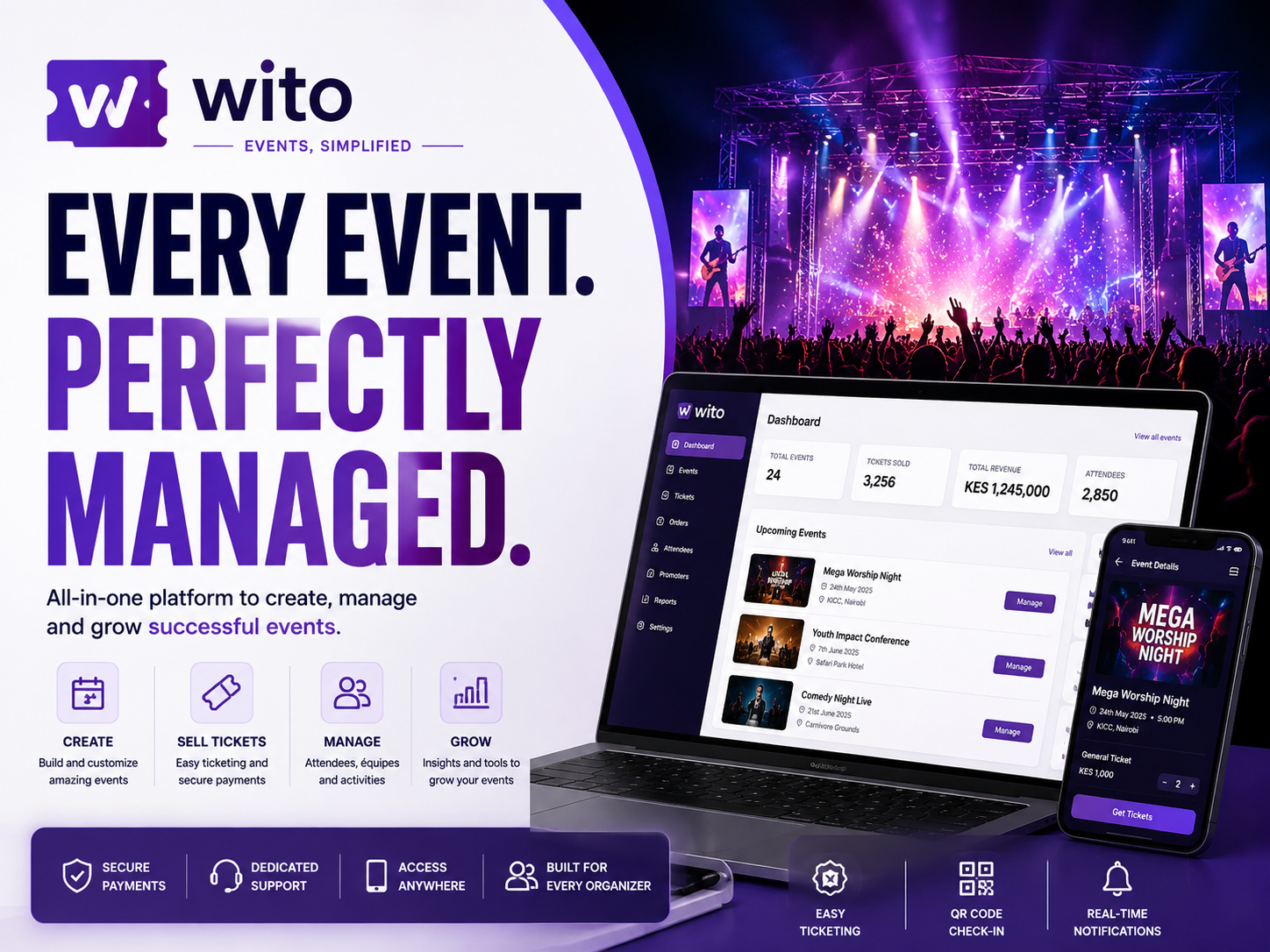
For organizations looking for an all-in-one platform, Wito combines online registration, digital ticketing, QR code generation, attendee management, reporting, and a powerful free event check-in system designed to simplify event operations from registration through final attendance reporting.
How a Free Event Check-In System Improves Event Management Efficiency
Organizing a successful event requires careful planning, accurate attendee information, and efficient coordination between different teams. While attracting attendees is important, managing their arrival and movement during the event can determine whether the entire experience feels professional or disorganized.
A free event check-in system helps solve many of the challenges faced by modern event organizers by replacing slow manual processes with digital verification. Instead of searching through printed attendance lists or manually confirming payments, staff can instantly identify registered guests, verify their tickets, and record attendance automatically.
For small organizations, startups, churches, schools, universities, and community groups, a free event check-in system provides access to professional event management features without requiring a large technology budget. This allows organizations to improve their operations while keeping costs under control.
As events become more digital, attendees expect faster entry, mobile-friendly experiences, and secure ticket verification. Organizations that adopt digital check-in solutions are better positioned to deliver smooth and memorable events.
Supporting Different Types of Events
A major advantage of a free event check-in system is its flexibility. Different organizations can use the same technology for different types of events without needing separate solutions.
Common events that benefit from digital check-in include:
- Conferences
- Corporate meetings
- Church conferences
- Christmas celebrations
- University graduations
- College events
- Business networking sessions
- Music concerts
- Sports competitions
- Charity fundraisers
- Product launches
- Exhibitions
- Training workshops
- Community gatherings
For example, a university can use digital check-in to verify graduating students and guests, while a church can use the same system to manage attendance during a large conference.
The ability to support different event formats makes a free event check-in system a valuable investment for organizations that host multiple events throughout the year.
Reducing Waiting Times at Event Entrances
One of the biggest challenges during large events is managing crowds at entry points.
Manual registration creates delays because staff must search for names, confirm payments, and record attendance manually. When hundreds of people arrive at the same time, queues quickly become difficult to control.
A free event check-in system speeds up entry by allowing staff to scan digital tickets instantly.
Instead of spending several minutes verifying each attendee, the process can be completed within seconds.
Benefits include:
- Faster guest movement
- Reduced congestion
- Better visitor experience
- Less pressure on registration teams
- Improved venue organization
For high-attendance events such as concerts, conferences, and graduations, faster entry creates a much smoother experience.
Managing Multiple Check-In Stations
Large events often require several registration points to handle attendee volume.
A reliable free event check-in system allows multiple staff members to check in guests simultaneously while accessing the same updated attendee database.
This makes it easier to manage:
- Main entrances
- VIP entrances
- Speaker registration
- Staff check-in
- Sponsor access
- Special guest areas
All attendance information remains synchronized, giving organizers accurate visibility regardless of how many check-in stations are operating.
Mobile-Based Check-In Solutions
Modern event management requires flexibility. Staff should not always depend on desktop computers or fixed registration desks.
A free event check-in system that supports mobile devices allows teams to use smartphones or tablets during attendee verification.
Mobile check-in provides:
- Greater flexibility
- Faster setup
- Easier movement around venues
- Reduced equipment requirements
- Better support for outdoor events
This is especially useful for events held in hotels, stadiums, campuses, conference centers, and open-air locations.
Offline Check-In Capability
Internet reliability can sometimes be a challenge, especially for outdoor events or locations with limited connectivity.
A professional free event check-in system should provide offline capabilities that allow organizers to continue verifying attendees even when internet access is temporarily unavailable.
Offline functionality helps teams:
- Continue scanning tickets
- Record attendance
- Avoid entry delays
- Synchronize information later
This ensures that technical issues do not interrupt the attendee experience.
Improving Event Security
Security is a major concern for any event. Organizers need to ensure that only authorized attendees enter the venue.
A free event check-in system strengthens security by providing digital ticket verification.
Security teams can quickly identify:
- Valid tickets
- Duplicate tickets
- Cancelled registrations
- Unauthorized access attempts
- Incorrect attendee information
This reduces the risk of ticket fraud and improves control over venue access.
Better Attendance Reports and Insights
Understanding attendance patterns helps organizations improve future events.
A free event check-in system automatically creates accurate attendance records that can be analyzed after the event.
Reports may include:
- Total registrations
- Number of attendees checked in
- Attendance percentage
- Peak arrival times
- No-show statistics
- Ticket category performance
- Entry point activity
These insights help organizations understand what worked well and what can be improved.
For example, if most attendees arrive within the first thirty minutes, organizers can increase staffing during that period to improve efficiency.
Benefits for Event Planning Teams
Event planning involves coordination between multiple departments. Marketing teams promote the event, finance teams manage payments, registration teams handle attendees, and operations teams manage logistics.
A free event check-in system creates a central source of information that allows teams to work together more effectively.
Planning teams benefit from:
- Accurate attendee databases
- Easy information sharing
- Improved communication
- Better preparation
- Reduced administrative tasks
This improves collaboration while reducing confusion during busy event periods.
Integrating Check-In with Event Ticketing
The strongest event management solutions connect registration, ticketing, payments, and attendance tracking in one system.
A free event check-in system integrated with ticketing software provides a complete attendee journey:
- Attendee discovers the event.
- Completes online registration.
- Receives digital ticket.
- Arrives at the venue.
- QR code is scanned.
- Attendance is recorded.
- Organizer receives reports.
This connected approach eliminates duplicate work and improves accuracy.
For Kenyan organizations using Wito, integrating ticketing and check-in creates a complete event management workflow that supports registration, digital tickets, QR verification, attendance monitoring, and reporting from one platform.
Why Wito Supports Modern Event Management
Organizations looking for a free event check-in system need more than a simple scanning tool. They need a platform that supports the entire event process from planning to completion.
Wito provides features that help organizations manage events professionally, including:
- Online event registration
- Digital ticket creation
- QR code ticket verification
- Attendee management
- Real-time attendance tracking
- Event reporting
- Registration customization
- Mobile-friendly access
- Secure event data management
Whether organizing a university event, church conference, corporate meeting, or community gathering, Wito helps simplify operations while improving attendee experiences.
Conclusion
A free event check-in system provides organizations with an affordable way to improve event efficiency, security, and attendee satisfaction. By replacing manual processes with digital verification, organizers can reduce queues, improve attendance accuracy, and gain valuable insights into event performance.
As Kenya’s events industry continues to grow, digital tools will become increasingly important for managing conferences, graduations, concerts, exhibitions, and community gatherings. Organizations that adopt reliable check-in solutions will be better prepared to deliver professional experiences.
Benefits of a Free Event Check-In System for Different Stakeholders
A successful event involves many different stakeholders working together to achieve a common goal. Event organizers, attendees, sponsors, speakers, volunteers, security teams, universities, churches, businesses, and community organizations all have different expectations and responsibilities.
A free event check-in system helps bring these different groups together by creating a structured, efficient, and reliable process for managing attendee access. Instead of each team working with separate records or manual processes, everyone can rely on accurate digital information.
For organizations managing events in Kenya, this approach is becoming increasingly important. Conferences, university functions, church gatherings, business forums, and community events often attract large audiences, making manual attendance management difficult and time-consuming.
By implementing a free event check-in system, organizations can improve coordination, reduce administrative pressure, and create a smoother experience for everyone involved.
Benefits for Event Organizers
Event organizers carry the responsibility of ensuring every part of an event operates successfully. They manage planning, registrations, communication, venue arrangements, staffing, and attendee experience.
Without proper systems, managing these responsibilities can become overwhelming, especially when attendance numbers increase.
A free event check-in system allows organizers to automate attendee verification while maintaining full control over event information.
Key benefits include:
- Faster attendee entry
- Accurate attendance records
- Reduced paperwork
- Improved staff coordination
- Real-time event monitoring
- Better reporting
- Easier post-event analysis
- Reduced administrative workload
Instead of spending hours preparing manual lists or confirming attendance after the event, organizers can focus on improving event quality and participant engagement.
The system also provides valuable insights that help organizers understand attendance trends and make better decisions for future events.
Benefits for Attendees
The attendee experience begins before they enter the venue. A complicated registration or slow check-in process can create a negative impression even before the event starts.
A free event check-in system improves the attendee journey by making entry faster and more convenient.
Attendees benefit from:
- Digital tickets
- QR code access
- Faster verification
- Reduced waiting times
- Mobile-friendly check-in
- Easier event navigation
- Professional event organization
Instead of carrying printed tickets or waiting while staff search through lists, attendees simply present their digital ticket and enter quickly.
This creates a better first impression and improves overall satisfaction.
Benefits for Universities and Colleges
Universities and colleges organize many large-scale events, including:
- Graduation ceremonies
- Student conferences
- Career fairs
- Alumni events
- Research exhibitions
- Public lectures
- Orientation programmes
These events often involve thousands of students, parents, staff members, and guests.
Managing such crowds manually creates unnecessary challenges.
A free event check-in system helps educational institutions:
- Verify student and guest tickets
- Control venue capacity
- Manage multiple entrances
- Track attendance
- Improve security
- Generate detailed reports
For graduation ceremonies, universities can easily separate categories such as students, parents, staff, VIP guests, and invited officials.
This improves organization while ensuring that only authorized participants access specific areas.
Benefits for Churches and Religious Organizations
Churches regularly organize events such as:
- Conferences
- Youth gatherings
- Worship concerts
- Christmas celebrations
- Leadership seminars
- Fundraising events
- Community outreach programmes
Large church events require efficient attendee management to avoid congestion and confusion.
A free event check-in system helps churches:
- Register members online
- Track attendance
- Manage seating capacity
- Coordinate volunteers
- Verify event access
- Maintain accurate records
Church administrators can also analyze attendance patterns to understand participation and improve future programmes.
For churches hosting multiple events throughout the year, having a reliable digital system reduces repeated administrative work.
Benefits for Businesses and Corporate Events
Companies organize events to connect with customers, employees, partners, and industry professionals.
Examples include:
- Product launches
- Corporate conferences
- Training sessions
- Networking events
- Annual meetings
- Customer appreciation events
Professional event management directly affects brand reputation.
A free event check-in system helps businesses create a smoother experience by providing:
- Faster guest registration
- VIP management
- Delegate tracking
- Attendance reports
- Better customer experience
- Improved event analytics
Companies can also use attendance data to measure event success and improve future marketing strategies.
Benefits for NGOs and Community Organizations
Non-governmental organizations and community groups often organize:
- Fundraising events
- Awareness campaigns
- Volunteer programmes
- Public forums
- Community workshops
These organizations require accurate records for accountability and reporting.
A free event check-in system helps NGOs:
- Track participant numbers
- Maintain attendance records
- Manage volunteers
- Improve transparency
- Generate reports for stakeholders
Accurate attendance information is especially valuable when organizations need to demonstrate impact to donors and partners.
Improving Efficiency Through Automation
Automation is one of the biggest advantages of using a free event check-in system. Instead of depending on manual processes, organizations can automate important tasks and reduce operational workload.
Automated Registration Management
Traditional registration requires staff to manually collect information and organize attendee lists.
A digital system automatically stores registration details and prepares them for check-in.
This reduces:
- Data entry errors
- Duplicate records
- Lost information
- Administrative delays
Automatic QR Code Generation
A free event check-in system automatically creates unique QR codes after registration.
Each QR code is linked to a specific attendee record, making verification faster and more secure.
At the venue entrance, staff simply scan the code and confirm attendance instantly.
Automated Attendance Tracking
Every successful check-in is automatically recorded.
Organizers can immediately see:
- Number of attendees present
- Remaining expected guests
- Entry activity
- Attendance trends
This eliminates the need to manually count participants.
Faster Communication
Many event platforms support automated communication before, during, and after events.
Organizers can send:
- Registration confirmations
- Event reminders
- Venue instructions
- Schedule updates
- Follow-up messages
This improves attendee engagement while reducing repetitive communication tasks.
Real-Time Event Monitoring
A major advantage of a free event check-in system is access to live information.
Organizers can monitor event activity as it happens instead of waiting until the event ends.
Real-time dashboards provide information about:
- Total registrations
- Completed check-ins
- Attendance percentage
- Entry locations
- Peak arrival times
- Staff activity
These insights allow event managers to respond quickly to challenges and improve operations.
Compliance, Security, and Risk Management
As organizations continue adopting digital event solutions, security and data protection have become essential considerations. A free event check-in system must do more than verify tickets; it should protect attendee information, improve access control, and provide reliable records that organizations can use for reporting and decision-making.
Events often collect sensitive information such as names, phone numbers, email addresses, payment details, company information, student details, or membership records. Managing this information through paper forms or spreadsheets increases the possibility of errors, unauthorized access, and data loss.
A professional free event check-in system provides a more secure approach by storing information digitally and controlling how different users access event data.
For organizations in Kenya, where digital registrations and mobile payments continue growing, adopting secure event technology helps build trust with attendees while improving operational efficiency.
Protecting Attendee Information
Every event organizer has a responsibility to protect attendee data.
A reliable free event check-in system should include security measures that help safeguard information throughout the event process.
Important security features include:
- Secure data storage
- User authentication
- Controlled access permissions
- Automatic backups
- Activity monitoring
- Secure ticket verification
- Protected attendee databases
These features help ensure that registration details remain confidential while allowing authorized teams to access the information they need.
Preventing Ticket Fraud and Unauthorized Access
Large events can face challenges such as duplicated tickets, unauthorized entry, or incorrect attendee information.
A free event check-in system improves security by linking every ticket to a unique digital identifier.
Through QR code verification, organizers can:
- Identify valid tickets
- Detect duplicate scans
- Reject invalid tickets
- Confirm attendee registration
- Monitor entry activity
This creates stronger control over venue access while improving the overall event experience.
Role-Based Access Management
Different members of an event team require different levels of access.
For example, a security officer may only need ticket verification tools, while an event manager may require access to reports and attendance analytics.
A modern free event check-in system supports role-based permissions, allowing administrators to control user access.
Possible roles include:
- Event Administrator
- Check-In Staff
- Registration Team
- Security Personnel
- Finance Team
- Marketing Team
- Volunteer Coordinator
This improves security while ensuring every team member has the tools required to complete their responsibilities.
Reliable Attendance Records
Accurate attendance information is important for many organizations.
Businesses may need attendance reports for corporate events, universities require records for graduation ceremonies, churches track participation in conferences, and NGOs need information for donor reporting.
A free event check-in system automatically records every successful check-in, creating reliable attendance data.
Reports can include:
- Registered attendees
- Checked-in attendees
- No-show participants
- Arrival times
- Ticket categories
- Attendance percentages
This eliminates the problems associated with manual attendance sheets.
Why Wito Is the Ideal Solution
Organizations searching for a free event check-in system need more than a simple ticket scanner. They need a complete platform that supports the entire event journey, from registration and ticket creation to attendee verification and reporting.
Wito provides a complete event management solution designed for organizations that want to manage events efficiently.
The platform supports:
- Online event registration
- Digital ticket creation
- QR code ticketing
- Attendee management
- Fast event check-in
- Attendance tracking
- Real-time dashboards
- Event reporting
- Registration customization
- Mobile-friendly access
Whether managing a church conference, university graduation, corporate seminar, charity event, concert, or community gathering, Wito helps organizations create smoother event experiences.
Unlike disconnected tools that handle only one part of event management, Wito brings registration, ticketing, and check-in processes together in one centralized platform.
This makes it easier for event teams to coordinate activities, monitor attendance, and deliver professional events.
Future Trends in Event Check-In Technology
The future of event management will continue moving toward automation, personalization, and smarter digital experiences.
A free event check-in system will continue evolving as organizations demand faster, safer, and more convenient ways to manage attendees.
Artificial Intelligence in Event Management
Artificial intelligence will increasingly support event organizers by helping them understand attendee behaviour and improve operations.
Future systems may assist with:
- Predicting attendance numbers
- Identifying peak arrival periods
- Improving staff allocation
- Automating customer support
- Detecting unusual activity
- Generating event insights
These capabilities will help organizations make better decisions while reducing manual work.
Mobile-First Event Experiences
Most attendees now use smartphones for online activities, including event registration.
Future free event check-in system solutions will continue focusing on mobile experiences through:
- Digital tickets
- Mobile QR codes
- Digital wallets
- Event notifications
- Mobile event apps
- Contactless entry
This will make event participation more convenient for attendees.
Self-Service Check-In Stations
Self-service kiosks are becoming more common at conferences, exhibitions, airports, and large public events.
Future check-in technology will allow attendees to verify themselves without depending entirely on registration staff.
Benefits include:
- Reduced queues
- Lower staffing requirements
- Faster entry
- Better attendee independence
Advanced Analytics and Reporting
Future platforms will provide deeper insights into event performance.
Organizations will be able to analyze:
- Attendance behaviour
- Registration trends
- Marketing effectiveness
- Venue performance
- Session popularity
- Participant engagement
These insights will help improve future events and increase return on investment.
Getting Started
Selecting the right free event check-in system requires understanding your organization’s needs.
Before implementing a solution, consider:
- Type of events you organize
- Expected number of attendees
- Number of entry points
- Required security level
- Need for QR code verification
- Reporting requirements
- Number of staff users
- Mobile device availability
- Future growth plans
After choosing a platform, organizations should:
- Create their event registration process.
- Configure ticket categories.
- Test QR code scanning.
- Train event staff.
- Prepare check-in stations.
- Monitor attendance during the event.
- Review reports afterward.
Proper preparation ensures a smooth implementation and better event outcomes.
Final Conclusion
A free event check-in system provides organizations with an affordable and effective way to improve event operations. By replacing manual attendance processes with digital verification, organizers can reduce queues, improve security, automate attendance tracking, and create better experiences for attendees.
From universities and churches to businesses, NGOs, and professional event planners, digital check-in technology is becoming an essential part of modern event management.
For organizations in Kenya, Wito provides an integrated platform that combines online registration, digital tickets, QR code verification, attendee management, and reporting in one solution. By adopting a reliable free event check-in system, organizations can manage events more professionally, reduce administrative challenges, and prepare for the future of digital event experiences.