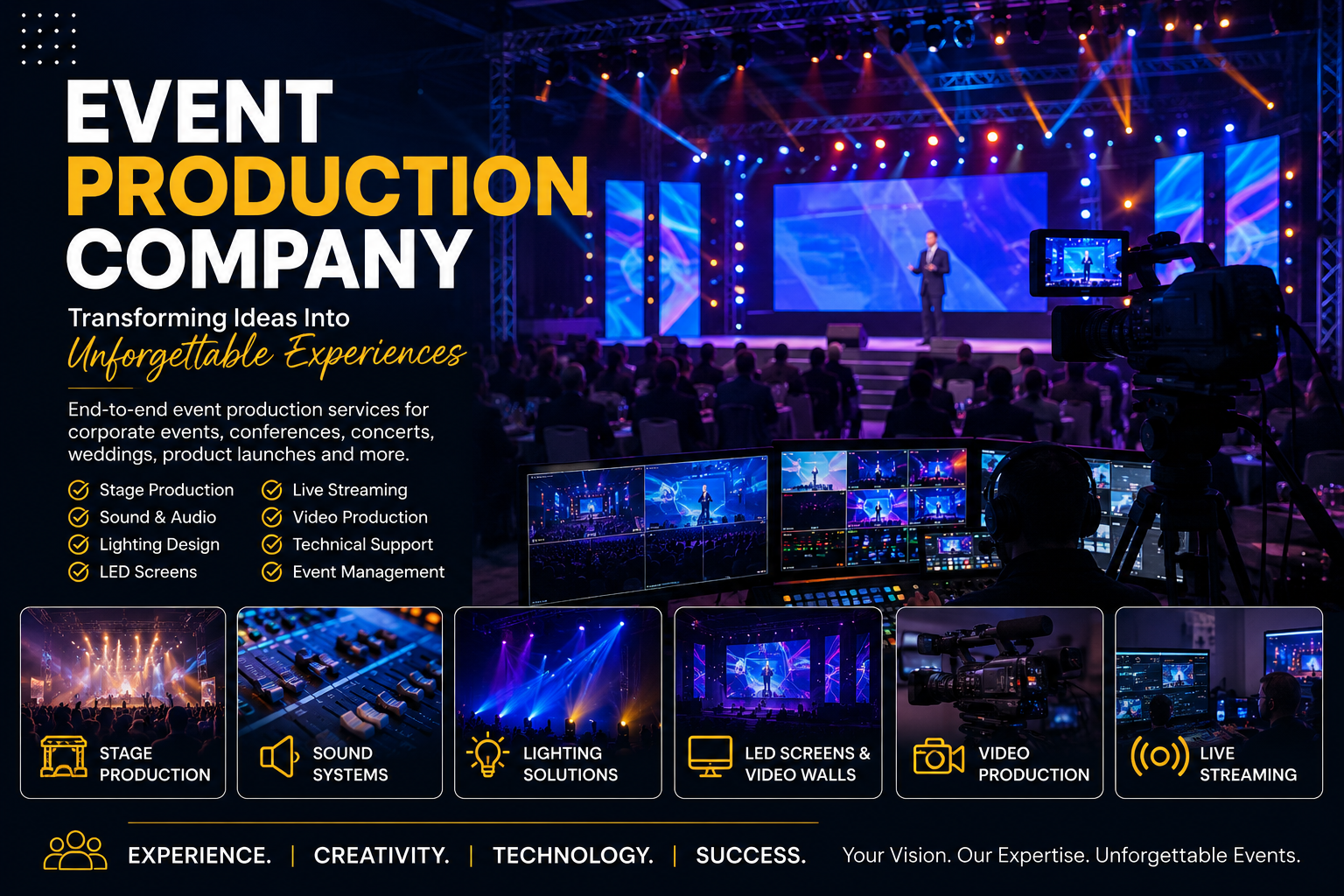
AV Production Company services have become an important part of modern event production, helping organizations deliver professional sound, visuals, presentations, lighting, and live event experiences. From corporate conferences and product launches to concerts, weddings, exhibitions, award ceremonies, and hybrid events, audiovisual technology plays a major role in how audiences experience an event.
A successful event requires more than simply placing speakers and screens in a venue. The equipment must be selected according to the venue, audience size, event program, stage design, and technical requirements. Professional audiovisual production brings these different elements together so that sound, video, lighting, cameras, displays, and presentations work as one coordinated system.
For businesses and organizations planning major events, working with an experienced AV Production Company can simplify the technical side of event management. Instead of dealing with separate suppliers for sound, video, lighting, screens, and technical support, an integrated production team can coordinate the different services under one production plan.
Modern events also increasingly combine physical and digital audiences. Conferences, corporate meetings, product launches, and entertainment events can now be streamed to people around the world. This means that production teams must think about both the people inside the venue and those watching online.
What Is an AV Production Company?
An AV Production Company specializes in providing and managing audio and visual technology for events, meetings, conferences, entertainment productions, and other live experiences.
The term AV refers to audiovisual technology. Audio includes everything related to sound, while visual production involves screens, cameras, projectors, video content, presentations, and other visual systems.
A professional production company may provide:
- Professional sound systems
- Wireless microphones
- Digital mixing consoles
- LED screens
- Video walls
- Projectors
- Cameras
- Video switching
- Stage lighting
- Presentation systems
- Live streaming
- Event recording
- Technical personnel
- Stage production
- Technical rehearsals
The exact services depend on the type and size of the event.
For example, a small corporate meeting may only require microphones, speakers, a projector, and presentation support. A large conference may require multiple LED screens, cameras, stage lighting, presentation management, livestreaming, and a team of technicians.
A concert can require even more advanced systems, including line-array speakers, subwoofers, stage monitors, moving lights, LED walls, cameras, and specialized technical crews.
Why Professional AV Production Matters
The quality of audiovisual production can directly influence how attendees perceive an event.
Imagine attending a conference where the presenter cannot be heard clearly. A microphone keeps cutting out, the presentation screen is difficult to see, and a video fails to play properly. Even if the event content is valuable, these technical problems can distract the audience.
A professional AV Production Company helps reduce these problems through proper planning, equipment testing, technical rehearsals, and on-site support.
Professional audiovisual production can improve:
- Sound clarity
- Presentation quality
- Audience engagement
- Event branding
- Stage appearance
- Communication
- Technical reliability
- Online participation
- Event recording
- Overall event experience
The purpose of AV technology is not simply to make an event look expensive. The technology should support the objectives of the event and make it easier for attendees to hear, see, understand, and participate.
Services Offered by an AV Production Company
A modern AV Production Company can provide a wide range of services depending on the event requirements.
Sound Production
Sound production ensures that speakers, performers, presenters, and videos can be heard clearly.
Professional sound services can include:
- PA systems
- Line-array systems
- Subwoofers
- Wireless microphones
- Digital mixers
- Stage monitors
- Amplifiers
- Audio processors
Sound engineers monitor the system throughout the event and make adjustments when necessary.
Video Production
Video production allows event organizers to display and distribute visual content.
It may include:
- Camera production
- Video switching
- LED screens
- Projectors
- Video recording
- Live camera feeds
- Presentation displays
- Video playback
Video production is particularly important for conferences, concerts, product launches, and hybrid events.
Lighting Production
Lighting can dramatically change the appearance and atmosphere of an event.
Professional lighting can include:
- Moving-head lights
- LED PAR lights
- Spotlights
- Stage washes
- Uplighting
- Architectural lighting
- Decorative lighting
Lighting can also be programmed to change according to different parts of the event.
Stage Production
The stage is often the visual center of an event.
Stage production can include:
- Stage platforms
- Backdrops
- LED walls
- Trussing
- Stage furniture
- Scenic elements
- Branded structures
The stage design should reflect the event’s purpose and branding.
Corporate Event AV Production
Businesses organize many events that require professional audiovisual support.
These include:
- Corporate conferences
- Annual general meetings
- Product launches
- Seminars
- Staff events
- Executive meetings
- Investor presentations
- Award ceremonies
- Company celebrations
- Training events
A professional AV Production Company can support these events by providing sound, video, lighting, screens, presentation systems, and technical operators.
Corporate events often involve senior executives, clients, partners, employees, and other important stakeholders. Technical failures can therefore affect the organization’s professional image.
Reliable audiovisual production allows presenters to focus on their message while technicians manage the technology behind the scenes.
Conference Production Services
Conferences can involve multiple speakers, panel discussions, presentations, videos, audience questions, and remote participants.
A professional conference setup may include:
- Podium microphones
- Wireless microphones
- Panel microphones
- LED screens
- Projectors
- Confidence monitors
- Presentation systems
- Cameras
- Live streaming
- Stage lighting
The production team should receive the conference schedule before the event.
This allows technicians to understand when speakers will appear, when presentations will change, when videos will play, and when microphones will be required.
A reliable AV Production Company can coordinate these technical requirements with event organizers, speakers, and venue teams.
Concert and Festival Production
Concerts and festivals require advanced audiovisual systems because they often involve large audiences and demanding performers.
A concert production setup may include:
- Line-array speakers
- Subwoofers
- Stage monitors
- Wireless microphones
- LED walls
- Moving lights
- Follow spots
- Cameras
- Video operators
- Lighting operators
Sound coverage is particularly important for large audiences.
The production team must ensure that the audience can hear the performance clearly across the venue.
Lighting and video systems can also create visual effects that complement the music and performance.
Wedding AV Production
Weddings can also benefit from professional audiovisual production.
Modern wedding production may include:
- Ceremony sound
- Reception sound
- Wireless microphones
- LED screens
- Projectors
- Live cameras
- Stage lighting
- Video playback
- Live streaming
Speeches, vows, announcements, and entertainment all require clear sound.
Visual systems can display photographs, videos, names, animations, and live camera feeds.
An experienced AV Production Company can design the system around the wedding venue and program while maintaining the desired atmosphere.
Product Launch AV Production
Product launches depend heavily on visual presentation.
The audience needs to clearly see the product, presentation content, demonstrations, and promotional videos.
A product launch can use:
- LED screens
- Product videos
- Demonstration cameras
- Presentation systems
- Stage lighting
- Branded graphics
- Live demonstrations
The production team can coordinate sound, lighting, video playback, and screen content around the product reveal.
This creates a more organized and engaging launch experience.
LED Screens and Video Walls
LED screens have become one of the most popular visual technologies in event production.
They can display:
- Presentations
- Videos
- Logos
- Animations
- Live camera feeds
- Sponsor messages
- Event schedules
- Social media content
Large LED screens are particularly useful in venues where attendees are seated far from the stage.
A professional AV Production Company can recommend the appropriate screen size, configuration, brightness, and resolution based on the venue.
Indoor LED Screens
Indoor LED screens are commonly used for:
- Conferences
- Corporate meetings
- Weddings
- Product launches
- Exhibitions
- Award ceremonies
They can provide bright visuals without requiring a traditional projector.
Outdoor LED Screens
Outdoor events require displays designed for outdoor conditions.
Outdoor LED screens may be used for:
- Concerts
- Festivals
- Outdoor conferences
- Brand activations
- Sports events
Brightness and weather protection are particularly important for outdoor installations.
Professional Sound Systems
Sound is one of the most important components of event production.
A sound system should provide consistent coverage without unnecessary distortion or excessive volume.
A professional setup may include:
- Main speakers
- Subwoofers
- Stage monitors
- Digital mixers
- Amplifiers
- Wireless microphones
- Audio processors
Before an event begins, technicians should perform a sound check.
This allows them to identify microphone issues, feedback, uneven coverage, and other technical problems.
Wireless Microphone Solutions
Wireless microphones provide presenters and performers with freedom of movement.
Common microphone options include:
Handheld Microphones
These are useful for:
- Interviews
- Presentations
- Audience questions
- Performances
Lavalier Microphones
Lavalier microphones are small and can be attached to clothing.
They are useful for presenters who need their hands free.
Headset Microphones
Headsets are suitable for presenters and performers who move around frequently.
Podium Microphones
Podium microphones are commonly used for formal speeches, conferences, and corporate presentations.
The microphone should always be selected according to the speaker and event requirements.
Audio Mixing and Engineering
Audio engineers manage the different sound sources during an event.
These may include:
- Speaker microphones
- Music
- Videos
- Instruments
- Audience microphones
- Remote speakers
- Stage monitors
Digital mixing consoles allow engineers to control multiple channels and adjust sound levels throughout the event.
An experienced AV Production Company will normally assign qualified audio technicians to monitor sound throughout the production.
Camera Production
Cameras allow organizers to capture and display live event footage.
A multi-camera production may include:
- Wide camera
- Speaker camera
- Side camera
- Audience camera
- Product camera
- Mobile camera
Camera feeds can be shown on LED screens or used for livestreaming.
Camera positions should be planned carefully so they do not obstruct the audience or interfere with stage activities.
Live Video Switching
Video switching allows the production team to move between different visual sources.
Sources can include:
- Camera feeds
- Presentation laptops
- Video playback
- Remote speakers
- Graphics
- Demonstration cameras
For example, during a keynote presentation, the director can switch between the speaker’s close-up, the presentation slide, and a wide stage shot.
This makes the production more engaging.
Live Streaming Services
Live streaming allows organizations to reach audiences who cannot attend an event physically.
A professional streaming setup can include:
- Multiple cameras
- Professional microphones
- Video switching
- Graphics
- Encoding
- Streaming platforms
- Recording
A professional AV Production Company can manage the technical streaming process while event organizers focus on the program.
Live streaming can be useful for:
- Conferences
- Corporate meetings
- Product launches
- Religious events
- Concerts
- Award ceremonies
- Training sessions
Hybrid Events
Hybrid events combine physical attendance with online participation.
This requires the production team to consider two audiences simultaneously.
Physical attendees need:
- Clear sound
- Stage visibility
- Screens
- Good lighting
- Presentation support
Online attendees need:
- Clear audio
- High-quality video
- Stable streaming
- Presentation visibility
- Remote speaker integration
A well-planned AV Production Company can integrate these systems into one production workflow.
Projector Systems
Projectors remain useful for many types of events.
They can display:
- Presentations
- Videos
- Branding
- Event graphics
- Training materials
When selecting a projector, technicians should consider:
- Brightness
- Resolution
- Screen size
- Venue lighting
- Audience distance
For some large events, LED screens may provide better visibility than projection.
Confidence Monitors
Confidence monitors allow presenters to see presentation content while facing the audience.
They can display:
- Presentation slides
- Speaker notes
- Timers
- Video feeds
- Event information
Confidence monitors can help presenters stay organized without turning their backs to the audience.
Technical Rehearsals
Technical rehearsals are essential for complex events.
Before the event begins, technicians should test:
- Microphones
- Speakers
- Cameras
- LED screens
- Projectors
- Presentations
- Lighting
- Video playback
- Streaming systems
Speakers and performers should participate in rehearsals whenever possible.
An experienced AV Production Company can use the rehearsal to identify potential problems before the audience arrives.
On-Site Technical Support
Technical support should continue throughout the event.
Technicians can monitor:
- Audio
- Video
- Screens
- Cameras
- Lighting
- Presentations
- Streaming
If a microphone fails or a presentation needs to be changed, the technical team can respond quickly.
This provides a major advantage over simply renting equipment without professional operators.
Backup Equipment
Even well-planned events can experience technical failures.
Important productions should therefore have backup systems available.
These may include:
- Spare microphones
- Backup laptops
- Extra cables
- Additional batteries
- Backup presentation files
- Spare signal converters
- Secondary internet connections
Having backup equipment can reduce downtime and protect the event from unexpected technical problems.
Planning for a Successful Event
Good audiovisual production begins before equipment arrives at the venue.
The production team should understand:
- Event objectives
- Venue layout
- Audience size
- Event schedule
- Speaker requirements
- Performer requirements
- Branding requirements
- Streaming needs
- Power availability
- Internet connectivity
This information helps the AV Production Company develop a production plan that matches the event.
A properly planned AV setup improves reliability, audience engagement, and the overall professional appearance of the event.