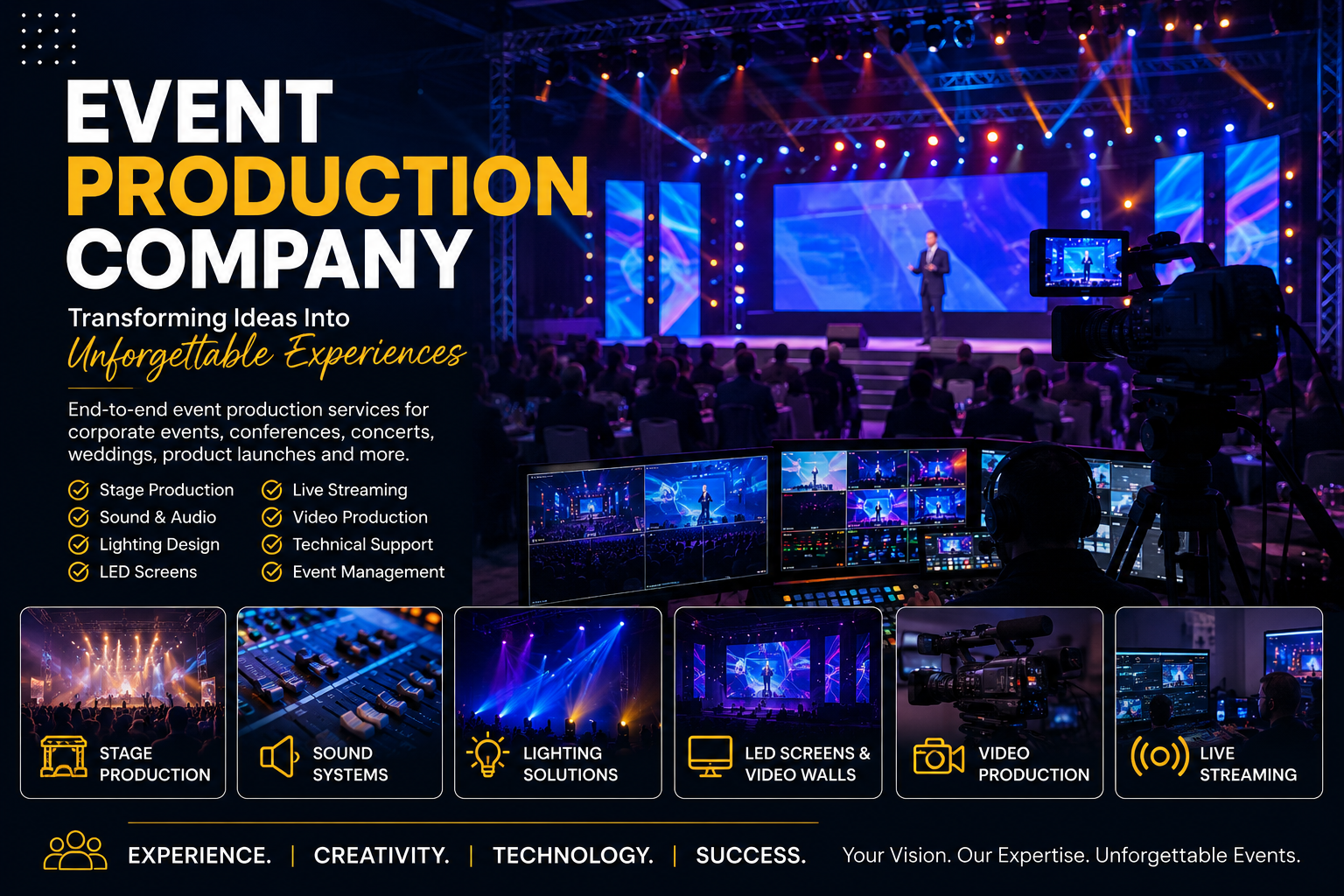
LED screen rental is becoming an essential part of modern event production in Kenya. From corporate conferences and product launches to weddings, concerts, church events, exhibitions, award ceremonies, political gatherings, and outdoor activations, LED screens provide a powerful way to deliver clear and engaging visuals to large audiences.
Unlike traditional projectors, LED screens produce their own light, making them highly visible in different lighting environments. They can display presentations, videos, branding, live camera feeds, animations, photographs, social media content, and other digital visuals. This makes them a flexible solution for event organizers who want to create a professional and memorable experience.
For organizations that only need large displays during specific events, LED screen rental can be more practical than purchasing expensive equipment. Instead of investing in LED panels, storage, transportation, maintenance, technical staff, and other supporting equipment, event organizers can hire a professional provider for the required period.
However, choosing the right LED screen involves more than simply selecting the biggest display available. Factors such as screen size, pixel pitch, brightness, viewing distance, venue type, content, installation, power requirements, and technical support all influence the final result.
This guide explains what you need to know when planning an LED display for your next event.
What Is an LED Screen?
An LED screen is a large digital display made from numerous light-emitting diodes. These small LEDs work together to create images, videos, text, graphics, and animations.
LED screens are usually built using modular panels. Multiple panels can be connected to create a display of almost any suitable size. This modular structure is one of the reasons they are so popular in event production.
For example, a small conference may require a relatively compact screen behind the main presentation area, while a large outdoor concert may require a massive LED wall designed to remain visible from a considerable distance.
When arranging LED screen rental, the display can be configured according to the available stage space and the needs of the audience.
The technology is suitable for both indoor and outdoor applications. However, indoor and outdoor LED screens have different specifications and should not automatically be treated as interchangeable.
Why Are LED Screens Important for Events?
Modern audiences expect events to provide more than speeches and physical stage decorations. Visual presentation has become an important part of creating an engaging experience.
An LED display can make an event more interactive by providing a large visual platform for communicating information.
During a conference, for example, attendees can see the speaker’s presentation, charts, videos, and branding on a large screen.
At a wedding, the screen can display photographs, videos, couple names, animations, and live footage from the reception.
During a concert, LED screens can display performers, backgrounds, animations, sponsor messages, and other visual effects.
For businesses, the display can become an important branding tool.
This flexibility makes LED screen rental suitable for many different event categories.
Indoor LED Screens
Indoor LED screens are designed for controlled environments such as conference halls, hotels, churches, theatres, ballrooms, exhibition centres, and indoor entertainment venues.
Because indoor environments generally have less direct sunlight, indoor LED displays do not necessarily need the extremely high brightness associated with outdoor screens.
They can instead focus on image quality and comfortable viewing at relatively close distances.
Indoor LED screens are commonly used for:
- Corporate conferences
- Seminars
- Workshops
- Weddings
- Church services
- Award ceremonies
- Indoor concerts
- Product launches
- Company meetings
- Exhibitions
- Training sessions
When choosing LED screen rental for an indoor event, the supplier should consider the size of the room, seating arrangement, stage dimensions, ambient lighting, and expected viewing distance.
A screen that looks appropriate from the stage may not provide enough visibility for people sitting at the back of a large hall.
Outdoor LED Screens
Outdoor LED screens are designed for environments where the display may be exposed to sunlight, rain, dust, wind, and other environmental conditions.
They typically require higher brightness than indoor displays so that the content remains visible during daylight.
Outdoor LED screens are commonly used for:
- Concerts
- Festivals
- Outdoor conferences
- Roadshows
- Sports events
- Political events
- Brand activations
- Outdoor weddings
- Public gatherings
- Product promotions
For outdoor LED screen rental, the technical requirements should be discussed with the provider before installation.
The supplier may need to consider the position of the sun, expected weather conditions, structural support, power availability, cable protection, and audience viewing distance.
Indoor vs Outdoor LED Screens
Understanding the difference between indoor and outdoor displays can prevent expensive mistakes.
Indoor screens are generally designed for controlled lighting conditions. Outdoor screens are designed to remain visible and operational in more demanding environments.
Suppose an event is scheduled outside during the afternoon. A display designed primarily for indoor use may struggle to provide sufficient visibility in direct sunlight.
On the other hand, an extremely bright outdoor screen may not be necessary for a small, dark conference room.
A professional LED screen rental provider should therefore ask questions about the venue before recommending a display.
The right screen depends on the environment in which it will operate.
Understanding Pixel Pitch
Pixel pitch is one of the most important specifications to understand when hiring an LED display.
Pixel pitch refers to the distance between the centres of two adjacent pixels on an LED panel. It is commonly expressed in millimetres.
A smaller pixel pitch generally means that pixels are positioned more closely together, allowing the display to provide finer image detail at shorter viewing distances.
A larger pixel pitch can be suitable for audiences that are positioned farther away.
For example, an LED screen installed behind a speaker in a conference hall may require a different pixel pitch from a huge outdoor display positioned hundreds of metres from the audience.
When requesting LED screen rental, do not simply ask for a screen size. Ask about the pixel pitch and recommended viewing distance as well.
Why Viewing Distance Matters
The audience’s distance from the screen has a major impact on the viewing experience.
If people are sitting very close to a large LED wall with a relatively coarse pixel pitch, individual pixels may become noticeable.
If the audience is positioned far away, a display with an unnecessarily fine pixel pitch may increase costs without providing a meaningful improvement for viewers.
The supplier should therefore evaluate the seating arrangement and determine an appropriate combination of:
- Screen size
- Pixel pitch
- Viewing distance
- Content type
- Screen resolution
This is one reason professional LED screen rental providers ask detailed questions about the event before preparing a quotation.
Choosing the Right LED Screen Size
Bigger does not always mean better.
The correct screen size depends on the venue and the audience.
For a small meeting, an enormous LED wall may dominate the room unnecessarily. For a large conference, however, a screen that is too small can make presentations difficult to see.
When selecting a screen, consider:
- Number of attendees
- Venue size
- Stage width
- Audience layout
- Viewing distance
- Type of content
- Camera requirements
- Indoor or outdoor location
For example, a screen intended primarily for displaying a speaker’s presentation may have different requirements from a screen intended to display large-scale promotional videos at an outdoor festival.
A professional LED screen rental company can help determine the appropriate dimensions based on these factors.
LED Screen Brightness
Brightness determines how easily an LED display can be seen in its environment.
Indoor venues usually have controlled lighting, while outdoor venues can have strong ambient light, especially during the day.
Outdoor displays therefore require suitable brightness to ensure that images remain visible.
However, brightness should not be considered independently.
The viewing environment, event schedule, screen location, content and lighting conditions should all be evaluated.
For example, a daytime outdoor event may have significantly different brightness requirements from an evening outdoor concert.
Before booking LED screen rental, explain the event schedule to the supplier.
LED Screens for Corporate Conferences
Corporate conferences are among the most common applications for large digital displays.
Businesses need attendees to see presentations, speaker information, company branding, videos, charts, statistics, product demonstrations, and other content.
An LED screen can serve as the central visual platform throughout the conference.
Instead of relying on a relatively small projector image, organizers can provide a large display that remains visible across a bigger audience area.
LED screens can also help create a consistent corporate appearance by displaying company logos, event themes, sponsor information, and branded graphics.
For conferences involving several speakers, the display can show speaker names and session titles between presentations.
LED Screens for Product Launches
Product launches depend heavily on presentation.
Companies want the audience to remember the product and associate it with a strong brand experience.
An LED screen can be used to create anticipation before the launch, display promotional videos, reveal the product, and provide detailed visuals throughout the presentation.
The screen can also support stage lighting and other production elements.
For a major product launch, the LED display can become one of the central components of the stage design.
This is another reason organizations increasingly consider LED screen rental when planning major marketing events.
LED Screens for Weddings
Weddings are another popular application for LED displays.
Large wedding receptions may have hundreds of guests, making it difficult for everyone to see the couple, speeches, performances, or other important moments.
An LED display can provide a live view of the stage.
It can also display:
- Couple photographs
- Engagement videos
- Wedding videos
- Names of the couple
- Custom graphics
- Reception schedules
- Messages from family and friends
- Live camera footage
For a modern wedding, a professionally installed LED screen can become both a practical viewing solution and an important part of the event decoration.
LED Screens for Concerts
Concerts require powerful visual production.
Performers can be difficult to see from the back of a large venue, especially when the audience is spread across a wide area.
LED displays can provide close-up camera shots of performers while also displaying creative backgrounds and animations.
The screen can be synchronized with the overall stage production to create a more immersive experience.
Concert organizers may also use LED screens to display sponsors and promotional messages.
Because concerts often involve complex lighting, sound, cameras, and video production, professional technical support is particularly important when arranging LED screen rental.
LED Screens for Church Events
Churches and religious organizations can use LED displays for different types of services and events.
Screens can display worship lyrics, Bible verses, announcements, sermon points, videos, and live camera feeds.
For large churches, an LED display can improve visibility for members seated farther away from the stage.
The technology can also be useful for conferences, crusades, worship concerts, youth events, and special services.
LED Screens for Exhibitions and Trade Shows
Exhibitions are highly competitive environments.
Several businesses may be displaying products and services within the same venue, making it important for exhibitors to capture visitors’ attention.
An LED screen can create a dynamic visual centre for a booth.
Instead of relying only on printed posters, a company can display promotional videos, product demonstrations, customer testimonials, company branding, and animated graphics.
The ability to change content also makes LED screens more flexible than static displays.
LED Screens for Brand Activations
Brand activations are designed to create memorable interactions between companies and their target audiences.
LED screens can support these activations by providing large digital displays for advertisements, videos, competitions, product demonstrations, and branded content.
Shopping malls, outdoor spaces, exhibitions and roadshows can all benefit from this type of technology.
For temporary marketing campaigns, LED screen rental allows businesses to access professional equipment without purchasing permanent infrastructure.
What Should You Ask an LED Screen Rental Provider?
Before booking a provider, ask for clear information about the equipment and service.
Important questions include:
- What screen sizes are available?
- What pixel pitches are available?
- Is the screen suitable for indoor or outdoor use?
- What brightness level does the screen provide?
- Is installation included?
- Is transportation included?
- Is technical support provided?
- Will a technician remain on-site?
- What power requirements are needed?
- Is backup equipment available?
- Can the company support live camera feeds?
- Can the provider assist with content preparation?
These questions can help you understand exactly what you are paying for.
Why Professional Installation Matters
LED screens consist of multiple interconnected panels and supporting systems.
Installation must be handled carefully to ensure that the panels are correctly aligned and connected.
Technical teams may also need to configure video processors, power distribution, media sources, cameras and other equipment.
For large outdoor displays, structural support is another important consideration.
A professional LED screen rental provider should have an installation process that includes setup, testing and final inspection before the event begins.
The Importance of Technical Support
Even high-quality equipment can experience technical problems.
A cable can become disconnected. A video source can stop working. A laptop can fail to output the expected resolution. A power issue can interrupt the display.
Having a qualified technician available can help resolve problems quickly.
For major events, technical support should be treated as part of the overall service rather than an optional extra.
A reliable LED screen rental provider should understand that the event cannot simply stop because of a technical issue.
LED Screen Rental: Costs, Planning, Installation and Choosing the Right Display
LED screen rental has become an important part of professional event production because it gives organizers access to large, high-quality digital displays without requiring them to purchase and maintain expensive equipment. Whether you are organizing a corporate conference, wedding, concert, product launch, exhibition, church event, graduation ceremony, political gathering, or outdoor activation, the right LED display can significantly improve how your audience experiences the event.
In Part 1, we covered the basics of LED screens, screen types, pixel pitch, brightness, viewing distance, screen size, and common applications. In Part 2, we will go deeper into the practical side of LED screen rental, including pricing, technical specifications, installation, content preparation, power requirements, transportation, technical support, and how to compare different rental packages.
How Much Does LED Screen Rental Cost?
One of the first questions event organizers ask is how much LED screen rental costs. The answer depends on several factors because LED displays are available in different sizes, resolutions, brightness levels, and configurations.
There is no universal price for every event.
A small indoor display for a corporate meeting will have different requirements from a large outdoor LED wall for a concert. Similarly, a screen required for a few hours may cost differently from equipment needed for several days.
Some of the factors that influence the final cost include:
- Screen dimensions
- Pixel pitch
- Indoor or outdoor application
- Rental duration
- Installation requirements
- Transportation distance
- Technical support
- Video processing equipment
- Live camera production
- Stage structure
- Power requirements
- Content production
- Setup and dismantling
When requesting LED screen rental, it is therefore better to provide the supplier with complete information about your event instead of simply asking for the price of a screen.
A professional supplier can then prepare a quotation based on the actual requirements.
Screen Size and Rental Cost
Screen size is one of the most obvious factors affecting rental costs.
A larger display requires more LED panels, more supporting equipment, additional transportation, and potentially more installation time.
For example, a small conference may require a display that fits behind a presenter, while a large outdoor event may require several large LED walls.
The important thing is not to choose the largest screen simply because it is available.
The screen should be proportional to the venue and audience.
A screen that is too small may make presentations difficult to read, while a screen that is unnecessarily large may increase costs without providing meaningful benefits.
The ideal LED screen rental package balances size, visibility, audience distance, and budget.
Pixel Pitch and Pricing
Pixel pitch can also influence rental costs.
A fine-pitch LED screen has smaller spaces between individual pixels and can provide detailed images at shorter viewing distances.
This makes fine-pitch displays useful for applications where the audience will be relatively close to the screen.
For example, an indoor corporate conference may benefit from a fine-pitch screen because attendees could be seated only a few metres from the display.
A large outdoor event may use a different pixel pitch because the audience is much farther away.
When comparing LED screen rental quotations, ask the supplier to specify the pixel pitch rather than simply listing the screen as “high resolution.”
This makes it easier to understand what equipment is actually being offered.
Indoor LED Screen Rental
Indoor events generally provide more controlled lighting conditions than outdoor events.
This means the display does not always require the extremely high brightness associated with outdoor LED screens.
Indoor displays are commonly used in:
- Hotels
- Conference centres
- Churches
- Ballrooms
- Universities
- Corporate offices
- Theatres
- Exhibition halls
- Indoor arenas
The screen should still provide sufficient brightness and image quality for the venue.
The supplier should consider the room’s lighting, seating layout, stage position, and viewing distance before recommending equipment.
Outdoor LED Screen Rental
Outdoor events introduce additional technical considerations.
Sunlight can make it difficult to see a display that is not bright enough.
Weather can also affect equipment installation and operation.
For outdoor LED screen rental, the supplier should consider:
- Daylight conditions
- Rain protection
- Wind exposure
- Ground conditions
- Structural support
- Power supply
- Cable protection
- Screen orientation
- Audience distance
- Security
Outdoor displays are generally designed to withstand more demanding environments, but the installation still needs to be planned carefully.
Why Brightness Matters
Brightness determines how clearly an LED display can be seen under different lighting conditions.
For an indoor evening event, moderate brightness may be sufficient.
For a daytime outdoor event, considerably stronger brightness may be necessary.
However, excessive brightness is not automatically better.
The display should be configured according to the environment so that the content remains clear and comfortable to view.
During LED screen rental planning, provide the supplier with information about the event time.
An event running from morning to evening may require brightness adjustments as the natural lighting changes.
Refresh Rate and Camera Use
Refresh rate becomes particularly important when professional cameras will be recording the event.
A display with an unsuitable refresh rate can produce unwanted flickering or visual lines when captured by cameras.
This can be especially problematic for:
- Concerts
- Livestreams
- Television productions
- Corporate events
- Product launches
- Weddings with professional videography
If your event will be livestreamed or professionally recorded, mention this when arranging LED screen rental.
The technical provider can recommend equipment appropriate for camera-based production.
LED Screen Rental for Live Streaming
Live streaming has become an important part of modern events.
An organization may have people attending physically while others watch the event online.
LED screens can form part of the wider live production system.
For example, cameras can capture speakers or performers, while the video production team sends the camera feed to the LED screen.
The same production system may simultaneously send the feed to an online streaming platform.
This can create a professional experience for both physical and remote audiences.
A typical setup may involve:
- Cameras
- Video switchers
- LED processors
- Media servers
- Streaming equipment
- Audio systems
- LED panels
- Technical operators
This is why LED screen rental should sometimes be planned together with the event’s overall audiovisual production rather than as an isolated service.
Content Preparation for LED Screens
The quality of the content displayed on the screen matters just as much as the physical equipment.
A high-quality LED display can still look unprofessional if the graphics are stretched, poorly formatted, low-resolution, or incorrectly positioned.
Before the event, content creators should understand the screen’s aspect ratio and resolution.
Content may include:
- Presentations
- Videos
- Logos
- Advertisements
- Photographs
- Animations
- Speaker graphics
- Sponsor slides
- Event schedules
- Social media feeds
During LED screen rental, the technical team should receive the content early enough to test it.
This gives them an opportunity to identify compatibility issues before the event begins.
Designing Content for Large LED Screens
Large displays have different requirements from standard television screens.
If text is too small, people at the back of the venue may struggle to read it.
If photographs have low resolution, they may appear blurry when enlarged.
If graphics are designed with the wrong aspect ratio, they may appear stretched or cropped.
For this reason, content should be designed specifically for the LED display whenever possible.
Use large, readable text and high-quality images.
Keep important information away from the extreme edges of the display.
For presentations, avoid placing too much information on a single slide.
The goal should be clear communication rather than simply filling the screen.
Video Processing
Video processors play an important role in professional LED displays.
The processor receives the video signal and converts it into a format that the LED screen can display correctly.
Depending on the event, the system may need to handle different input sources.
These could include:
- Laptops
- Cameras
- Media servers
- Streaming systems
- Video switchers
- Presentation systems
A professional LED screen rental provider should ensure that all input sources are compatible with the display system.
Multiple LED Screens
Some events require more than one screen.
For example, a large conference may use a central LED wall together with side screens.
A concert may use a large centre screen and additional side displays.
Multiple screens can improve visibility across a wide venue.
They can also allow different content to be displayed simultaneously.
However, multiple-screen setups require careful signal distribution and synchronization.
The technical team must ensure that the displays receive the correct signals and maintain consistent image quality.
LED Screen Rental and Stage Design
LED displays are increasingly integrated directly into stage designs.
Instead of treating the screen as an independent piece of equipment, event designers can make it part of the overall stage environment.
The display can work alongside:
- Stage lighting
- Trussing
- Audio systems
- Decorative elements
- Cameras
- Moving lights
- Special effects
This can create a more cohesive visual presentation.
For corporate events, the screen can reinforce branding.
For concerts, it can become part of the artistic performance.
For weddings, it can function as both decoration and entertainment technology.
Installation Requirements
Professional installation is essential for large LED displays.
The installation team must assemble panels correctly and ensure that connections are secure.
Depending on the event, the screen may be mounted on:
- Ground support structures
- Stage structures
- Trusses
- Specialized frames
- Temporary event structures
The installation method depends on the venue and the size of the display.
For LED screen rental, the supplier should assess the installation area before the event.
This is particularly important for outdoor installations.
Ground Support vs Hanging Installation
There are different ways to install LED displays.
Ground-supported LED screens are placed on a supporting structure from the floor.
This can be suitable for large outdoor displays and stage applications.
Hanging installations involve suspending the display from an appropriate structure.
The choice depends on the venue, screen size, available infrastructure, structural limitations, and safety requirements.
Installation should always be handled by qualified professionals.
Transportation and Logistics
Large LED screens consist of many panels and accessories.
Transporting them to an event requires planning.
The rental company may need to transport:
- LED panels
- Processing equipment
- Cables
- Power distribution systems
- Supporting structures
- Control equipment
- Backup components
- Installation tools
For LED screen rental, transportation should be considered when preparing the event budget.
The distance between the equipment warehouse and venue can affect logistics costs.
Venue access should also be considered.
A supplier needs to know whether vehicles can reach the loading area and whether there are restrictions on setup times.
Setup and Dismantling Time
LED screen installation can take time depending on the size and complexity of the system.
Large displays may require many panels to be assembled and tested.
The rental company should know when the venue will become accessible to the technical team.
For major events, installation may happen several hours or even a day before the event.
Dismantling also needs to be planned.
The team should know when guests have left and when the venue allows equipment removal.
When requesting LED screen rental, confirm the setup and dismantling schedule in advance.
Power Requirements
Power is an important consideration for LED screens.
The amount of power required depends on factors such as:
- Screen size
- LED technology
- Brightness
- Number of panels
- Operating conditions
Large outdoor displays can require significant electrical capacity.
The event organizer should confirm that the venue has an appropriate power supply.
If the venue does not have sufficient power, a generator or other suitable power solution may be required.
Power distribution should be handled professionally to reduce operational and safety risks.
Backup Power
For important events, backup power can be valuable.
A power interruption during a keynote presentation, product launch, wedding ceremony, or concert can negatively affect the entire event.
Depending on the event’s importance, organizers may consider backup generators or other appropriate power solutions.
A professional LED screen rental provider can work with the event production team to determine suitable backup arrangements.
Technical Operators
Large LED systems are not always plug-and-play equipment.
Professional events may require technicians to operate the display and manage different video sources.
A technical operator may be responsible for:
- Switching content
- Managing video inputs
- Adjusting brightness
- Monitoring the screen
- Troubleshooting problems
- Coordinating with the event producer
- Managing live feeds
For major events, having an operator available throughout the program can provide additional reliability.
LED Screen Rental Packages
Rental companies may offer different service packages.
A basic package could include the LED display and installation.
A more comprehensive package may include:
- LED screen
- Transport
- Installation
- Dismantling
- Video processor
- Technical operator
- Cameras
- Live production
- Power equipment
- Backup equipment
When comparing quotations, check what is included.
A lower initial quotation may not necessarily be cheaper once additional services are added.
How to Compare Rental Quotations
Do not compare quotations based solely on the final price.
Instead, compare the complete specifications.
Create a simple comparison covering:
- Screen size
- Pixel pitch
- Brightness
- Indoor/outdoor rating
- Installation
- Transport
- Technical support
- Processing equipment
- Setup time
- Dismantling
- Backup equipment
- Total price
This allows you to determine whether two suppliers are actually offering equivalent services.
Choosing a Reliable LED Screen Rental Company
The supplier you choose can have a significant effect on the success of the event.
Look for a provider with experience in the type of event you are organizing.
A company experienced in conferences may understand presentation requirements, while a provider specializing in concerts may have more experience with live production and stage visuals.
Ask about previous projects and equipment.
You can also request photographs or videos showing previous installations.
Check Equipment Quality
Before confirming LED screen rental, ask about the condition and quality of the equipment.
Important things to consider include:
- Panel condition
- Image consistency
- Brightness
- Color reproduction
- Pixel pitch
- Refresh rate
- Processing equipment
- Cable quality
- Backup equipment
Well-maintained equipment is less likely to cause problems during the event.
Consider Technical Experience
Equipment alone is not enough.
The technical team needs to understand how to install and operate the system.
Experienced technicians can identify potential problems before they become major issues.
They can also coordinate with other event suppliers such as lighting, sound, staging, cameras, and event production teams.
This coordination is especially important for complex events.
Book Early
Popular LED screen rental equipment can become unavailable during busy event periods.
Large conferences, weddings, concerts, graduations, and end-of-year corporate events may create high demand for event production equipment.
Booking early provides more time to:
- Select equipment
- Inspect the venue
- Prepare content
- Plan installation
- Arrange transport
- Test video
- Confirm power
- Coordinate with other suppliers
Last-minute bookings may limit your options.
Common Mistakes to Avoid
One common mistake is choosing a screen solely because it is large.
Another is ignoring pixel pitch.
Some organizers also forget to consider sunlight when planning outdoor events.
Other common mistakes include:
- Not testing content
- Ignoring power requirements
- Failing to plan setup time
- Choosing an inexperienced installer
- Not confirming technical support
- Comparing prices without comparing specifications
- Failing to discuss camera requirements
- Waiting until the last minute
Proper planning can prevent many of these problems.
How to Get the Best Value From LED Screen Rental
Getting good value does not necessarily mean finding the cheapest quotation.
Instead, focus on choosing equipment that matches the event.
For example, a small indoor conference may not need an enormous outdoor LED wall.
Similarly, a major outdoor concert should not use equipment that is designed primarily for a small indoor meeting.
The best solution balances:
- Audience size
- Viewing distance
- Venue
- Screen size
- Pixel pitch
- Brightness
- Content
- Technical requirements
- Budget
This approach ensures that the money spent on LED screen rental contributes directly to the audience experience.
Preparing for the Rental Company
Before contacting a provider, prepare basic event information.
Provide:
- Event date
- Event location
- Indoor or outdoor venue
- Expected attendance
- Stage dimensions
- Audience layout
- Event start time
- Event end time
- Screen position
- Content requirements
- Camera requirements
- Power availability
The more information you provide, the easier it is for the supplier to recommend the correct solution.