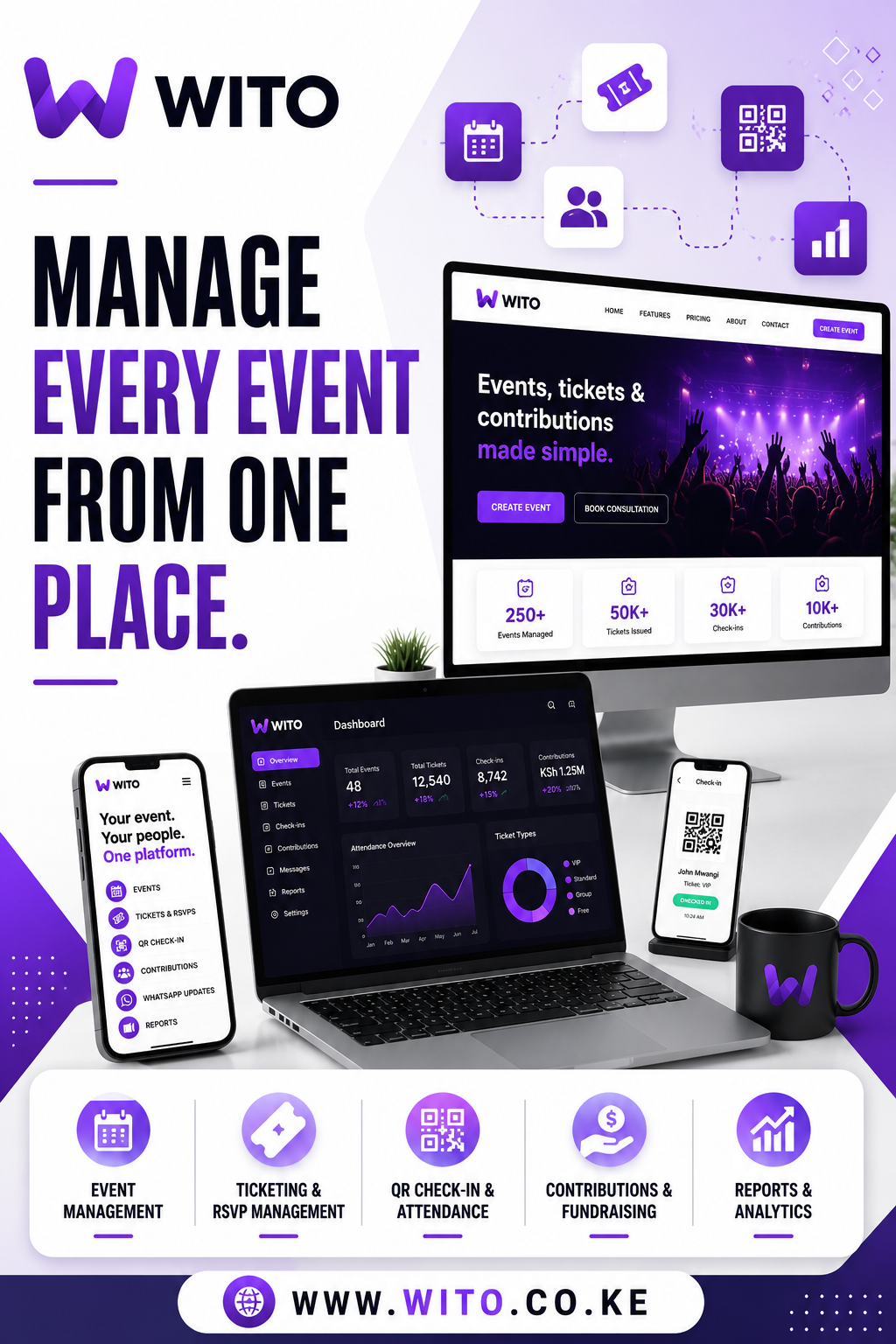
The event management software market has become one of the fastest-growing segments of enterprise software globally, driven by accelerating digital transformation across events, conferences, weddings, fundraisers, and community gatherings. The event management software in market reached an estimated $8–10 billion in 2025 and is projected to grow 12–15% annually through 2030, with particularly explosive growth in emerging markets including Africa. Understanding the event management software in market landscape is critical for software vendors, investors, event organizers, and organizations evaluating adoption decisions. This analysis explores the event management software in market across multiple dimensions: market size and segmentation, regional growth patterns, technology trends, competitive dynamics, and specific opportunities within the African event management software in market where digitalization is still in early innings.
The event management software market reflects a fundamental shift in how organizations coordinate gatherings. Fifteen years ago, events were largely analog—spreadsheets, printed materials, in-person coordination, paper registrations, cash collections. Today’s event management software in market encompasses SaaS platforms, mobile apps, AI-powered analytics, real-time communication, financial integrations, and hybrid event orchestration. This transformation isn’t marginal—the event management software in market represents the convergence of event operations, financial management, communication, analytics, and attendee experience into unified digital platforms.
Table of Contents
- Market Size and Growth Trajectory
- Segmentation of the Event Management Software Market
- Key Market Drivers and Growth Catalysts
- Regional Analysis and Geographic Opportunity
- Technology Trends Reshaping the Event Management Software Market
- Competitive Landscape and Market Consolidation
- Investment and Venture Capital Activity
- Future Outlook and Emerging Opportunities
Estimating the exact size of the event management software inmarket requires clarification, as market research firms segment differently. Narrow definitions (software specifically engineered for events, excluding general project management tools with event features) place the market at $8–10 billion globally as of 2025. Broader definitions (including all software with event management capability) approach $20+ billion. This analysis uses the narrower definition—purpose-built event management platforms.
The event management software inmarket growth has accelerated post-2020. The pandemic forced digital-first event operations: virtual events, hybrid formats, and distributed attendee bases created urgent demand for software that could coordinate complex digital and physical experiences simultaneously. Event organizers who adopted solutions during the crisis recognized productivity gains and attendee engagement improvements that persisted post-pandemic, making the event management software in market transition permanent rather than temporary.
Market research analysts project the event management software in market growing from approximately $9 billion in 2025 to $14–16 billion by 2030, representing compound annual growth rates (CAGR) of 12–15%. This growth outpaces general enterprise software (4–7% CAGR), reflecting the sector’s expansion. Within the event management software in market, software-as-a-service (SaaS) models dominate—approximately 85% of revenue—while specialized vertical solutions and open-source alternatives capture smaller shares.
The event management software in market consolidation through acquisition has accelerated. Large enterprise software vendors (Salesforce, ServiceNow, Adobe) have acquired event management platforms to expand their offerings. This consolidation reflects recognition that the event management software in market is strategically valuable to broader customer bases.
Segmentation of the Event Management Software in Market
The event management software in market isn’t monolithic. Segmentation reveals distinct customer segments, use cases, and vendor specializations.
By Event Type – The event management software in market divides into specialized verticals: conferences and large-scale events (highest average deal size, complex logistics), corporate events and internal meetings, weddings and social events, festivals and entertainment, fundraising and ticketed events, religious gatherings, and educational events. No single platform dominates all segments; specialized vendors thrive by deeply understanding specific event types’ unique workflows.
By Organization Size – The event management software in market segments by buyer organization size: enterprise (Fortune 500 companies with large event budgets), mid-market (regional organizations, professional services firms), and small business (independent event planners, local nonprofits). The event management software in market shows distinct pricing, feature, and support models across these segments.
By Geography – The event management software in market differs dramatically by region. North America and Western Europe represent the most mature markets (90% vendor concentration, premium pricing, feature-rich platforms). The Asia-Pacific region is the fastest-growing market segment. African and Latin American markets represent high-growth but underpenetrated opportunities within the broader event management software in market.
By Deployment Model – The event management software in market divides into cloud SaaS (dominant, 85%+ of market), on-premise (legacy, declining), and hybrid models. Cloud dominates because it eliminates infrastructure investment, simplifies updates, and enables geographic scalability—critical for the global event management software market.
By Revenue Model – The event management software market includes subscription SaaS (most common), per-transaction fees (transaction processing), commission-based (ticketing platforms), and freemium models. Different revenue models appeal to different customer segments within the broader event management software market.
Key Market Drivers and Growth Catalysts
Several macro trends are expanding the event management software market and accelerating adoption.
Digital Transformation Across All Industries – Organizations across sectors (healthcare, finance, retail, nonprofits, government) are systematizing previously manual operations. Event management is catching this wave—what was handled by spreadsheets and email now flows through digital platforms. This wave will continue, driving the event management software market expansion.
Hybrid and Virtual Event Adoption – The pandemic accelerated hybrid events (simultaneous in-person and virtual attendance). Even post-pandemic, hybrid remains popular because it expands geographic reach and removes barriers to participation. Managing hybrid events demands sophisticated software—you can’t coordinate physical and virtual simultaneously with spreadsheets. Hybrid normalization permanently expands the event management software market.
Attendee Experience Expectations – Modern attendees expect app-based event experiences: personalized agendas, mobile check-in, real-time networking, post-event recordings, and follow-up engagement. Organizations providing these experiences use event management software. This raises the floor for competitive events, expanding the event management software market among competitors who must adopt to stay current.
Data-Driven Decision Making – Organizations increasingly measure event ROI and make data-informed decisions about event strategy. The event management software market growth reflects demand for analytics platforms that provide attendee insights, session performance metrics, speaker effectiveness, and sponsor ROI—data that enables continuous improvement.
M-Pesa and Digital Payment Normalization – In emerging markets, particularly Africa, the event management software market expansion is directly tied to digital payment adoption. As M-Pesa, bank transfers, and digital wallets become standard, event organizers increasingly demand platforms integrating these payment methods. This unlocks adoption across markets where event management software was previously impractical.
Regulatory and Compliance Requirements – Data privacy regulations (GDPR in Europe, emerging frameworks in Africa) create compliance burdens that event organizers can’t manage manually. Purpose-built event management software handles consent tracking, data retention, and audit trails, making it increasingly mandatory for professional events. This regulatory backdrop expands the event management software market.
Regional Analysis and Geographic Opportunity
The event management software market’s geographic distribution reveals vastly different maturity levels and growth trajectories.
North America and Western Europe (Mature Market) – These regions account for approximately 55–60% of global event management software market revenue. Penetration is high among mid-market and enterprise organizations. Growth rates are modest (5–8% annually) because the market is largely saturated. Competitive intensity is extreme—dozens of well-funded vendors compete on feature differentiation, customer service, and integration ecosystem breadth.
Asia-Pacific (Rapid Growth Market) – The event management software market in Asia-Pacific (particularly China, India, Singapore, and Australia) is experiencing 18–22% annual growth. The region combines large event volumes, rising digital adoption, and a maturing SaaS ecosystem. The event management software market in Asia-Pacific is expected to grow from approximately 20% of global revenue (2025) to 30% by 2030.
Latin America (Emerging Market) – The event management software market in Latin America is growing 12–16% annually, driven by increasing conference activity, corporate event professionalization, and digital payment infrastructure expansion. The market remains underpenetrated—most event organizations still operate analog workflows—creating large greenfield opportunity within the event management software market.
Middle East and Africa (High-Growth Emerging Market) – The event management software market in Africa and the Middle East represents the fastest-growing regional segment, with projected growth rates of 20–28% annually through 2030. This rapid growth reflects several factors: (1) the event industry is booming in African cities (Nairobi, Lagos, Accra, Johannesburg) as the middle class expands, (2) digital payment infrastructure is maturing rapidly (M-Pesa in East Africa, mobile money solutions continent-wide), (3) competition for global conferences is intensifying, making professional event management tools necessary, and (4) the event management software market serves untapped demand from churches, chamaas, schools, and community organizations as pricing drops to accessible levels.
The event management software market opportunity in Africa is particularly significant because most existing solutions were built for Western markets and don’t accommodate local realities (M-Pesa, WhatsApp-first communication, offline capability, Swahili language, affordable pricing). Vendors that build solutions for the African event management software market—rather than porting Western solutions—will capture disproportionate share of this high-growth segment.
Technology Trends Reshaping the Event Management Software Market
The event management software market is being reshaped by several emerging technologies and architectural trends.
Artificial Intelligence and Machine Learning – AI is increasingly embedded in event management software market platforms. Applications include attendee matching (identifying who should meet based on profile analysis), personalized agenda recommendations (suggesting sessions based on interests and past behavior), predictive no-show modeling (identifying attendees likely to skip), real-time content recommendation, and sentiment analysis from attendee feedback. AI-powered event management software market solutions offer measurable improvements in attendee experience and event ROI.
Mobile-First and App-Based Experiences – The event management software market is decisively shifting to mobile as the primary interface. Event apps are no longer nice-to-have—they’re expected. Apps that offer offline capability, push notifications, real-time updates, and intuitive check-in experiences drive higher attendee engagement. The event management software market reflects this with vendors prioritizing native mobile development over web-first approaches.
Conversational Interfaces and Chatbots – WhatsApp, Telegram, and in-app messaging are becoming primary channels within event management software market platforms. Attendees increasingly expect to interact with event software through conversational interfaces rather than web portals. Event management software market leaders are building WhatsApp bots, SMS integration, and conversational event coordination capabilities.
Blockchain and Verifiable Credentials – An emerging trend in the event management software market is blockchain-based attendee credentials and digital certificates. Speakers and attendees can receive verifiable digital badges, credentials, or certificates that prove conference attendance or speaking history. This is particularly valuable in professional conferences where credentials have downstream value (LinkedIn verification, professional certifications).
Real-Time Data and Analytics Dashboards – Modern event management software market platforms provide real-time operational visibility. Organizers see live check-in counts, session occupancy, speaker status, attendee engagement metrics, and networking activity all updated continuously. This real-time dimension is now table-stakes in the event management software market.
Integration and API-First Architecture – The event management software in market is increasingly API-first, with vendors building integration ecosystems connecting to CRM, accounting, email marketing, social media, and other business tools. This reflects that event management software in market platforms must work within broader business technology stacks rather than operate in isolation.
Competitive Landscape and Market Consolidation
The event management software in market competitive landscape is fragmented at the global level but increasingly consolidating at the segment level.
Leading Global Platforms – Cvent, Splash, Bizzabo, Hubb, and Brella are among the largest pure-play event management software in market platforms by revenue. These vendors have achieved market leadership through feature breadth, integration ecosystem strength, and customer support. All have expanded through acquisition, absorbing specialized competitors.
Vertical Specialists – Within the event management software in market, specialists thrive by deeply solving specific event types’ unique needs. For example, Splash specializes in social and experiential events; Bizzabo focuses on community conferences; Eventbrite targets consumer ticketing. Vertical specialization allows the event management software in market players to outcompete generalists on specific use cases.
Enterprise Integration Plays – Large vendors (Salesforce, ServiceNow, Adobe) have entered the event management software in market by acquiring platforms and integrating them into suites. This reflects that enterprise event management is increasingly bundled with CRM and customer experience platforms within buyers’ technology stacks.
Regional and Emerging Market Vendors – The event management software in market in Africa, Asia-Pacific, and Latin America features regional specialists who understand local requirements (payment methods, languages, regulatory environment, pricing expectations). These vendors are often better positioned than Western global vendors to capture emerging market opportunity within the event management software in market.
Open-Source and DIY Platforms – The event management software in market includes open-source alternatives (Indico, Pretalx) that appeal to technical organizations willing to host and maintain their own infrastructure. These platforms capture small but meaningful market share within the event management software in market.
Consolidation trends suggest the event management software in market is moving toward a “winner-take-most” outcome at the global enterprise segment, with 2–3 dominant platforms capturing majority share, while specialized vendors and regional platforms retain significant market share in vertical and geographic niches within the broader event management software in market.
Investment and Venture Capital Activity
Venture capital activity in the event management software in market reveals investor confidence and identifies emerging leaders.
Capital Deployment – The event management software in market has attracted over $1 billion in venture capital since 2015, with particularly active investing from 2018–2021 during the hybrid event boom. Notable large rounds include: Bizzabo ($150M+ raised), Splash ($40M+), and Splash ($80M+). This capital influx reflects investor recognition that the event management software in market opportunity is both large and structurally secular (not a pandemic-era temporary phenomenon).
Strategic Acquisitions – Large enterprise software vendors have deployed significant capital acquiring event management software in market players. Salesforce, ServiceNow, and Adobe have each acquired one or more event management platforms, reflecting that these vendors see event management as strategically critical to their customer bases. These acquisition prices (often $200M–$500M for leading platforms) validate the event management software in market’s valuation levels.
Post-Pandemic Repricing – Valuations in the event management software in market contracted 30–50% from peak 2021 levels to 2024–2025 levels, reflecting broader venture repricing toward profitability and unit economics. This moderation has actually been healthy, forcing the event management software market toward sustainable business models and reducing irrational competition.
Africa-Focused Investment – Venture capital specifically targeting African event management software market opportunities is emerging, with funds like Plug and Play (Africa), and individual VCs recognizing the region’s market potential. However, dedicated African venture funding for event management software market remains limited relative to market opportunity—a gap that suggests strong returns for investors willing to focus on the Africa event management software in market.
The event management software market will continue expanding through 2030, with several evolution vectors shaping the landscape.
Consolidation and Vertical Specialization – The global event management software market will likely consolidate further, with 2–3 dominant global platforms capturing enterprise segment share, while vertical specialists (conference software, wedding software, nonprofit fundraising software) retain strong positions. The event management software market will move from “event management generalists” to “platform + specialist ecosystem.”
Hybrid Event Normalization – Hybrid events are now permanent, expanding the event management software market addressable opportunity. Organizations that could previously operate with basic ticketing now need full hybrid orchestration, increasing average deal size within the event management software market.
Emerging Market Penetration – The event management software market’s growth in emerging markets (Africa, Asia-Pacific, Latin America) will accelerate as digital payment infrastructure matures and solutions tailored to local requirements proliferate. Within the African event management software market specifically, penetration is expected to grow from current 5–10% to 30–40% by 2030, representing 20–25% annual growth rates.
Enterprise ROI Focus – The event management software market will increasingly emphasize measurable ROI and data-driven event decisions. Software providing stronger analytics, attendee insights, and speaker/session effectiveness metrics will command premium valuations within the event management software market.
Sustainability and ESG Tracking – An emerging demand within the event management software market is environmental impact tracking and ESG reporting. Conferences increasingly report carbon footprints and sustainability metrics, creating opportunity for the event management software market to embed environmental tracking capabilities.