Event check-in system is one of the most important technologies for modern event management. Whether you’re organizing a conference, concert, church convention, university graduation, corporate seminar, exhibition, sports tournament, charity fundraiser, or community festival, an event check-in system helps streamline attendee entry, reduce waiting times, improve security, and provide real-time attendance tracking. As events continue to embrace digital transformation, organizers are replacing manual attendance lists with intelligent check-in solutions that create a faster, more professional experience for everyone involved.
A modern event check-in system goes far beyond scanning tickets at the entrance. It integrates with event registration, ticketing, payment verification, attendee databases, and reporting tools to provide organizers with complete visibility throughout the event. Instead of relying on paper guest lists or manually searching for attendee names, staff can verify tickets instantly using QR codes, barcodes, or digital passes.
Across Kenya, organizations are increasingly adopting digital event management solutions to improve operational efficiency. Churches use check-in systems for conferences and worship events, universities manage graduation ceremonies digitally, businesses verify delegates during seminars, and event planners simplify entry for concerts and festivals. Choosing the right event check-in system allows organizers to manage attendees confidently while delivering a seamless arrival experience.
Table of Contents
- Introduction
- What Is an Event Check-In System?
- Why Every Modern Event Needs Digital Check-In
- How an Event Check-In System Works
- Essential Features to Look For
- Benefits for Organizers and Attendees
- QR Code Check-In Technology
- Real-Time Attendance Tracking
- Choosing the Right Solution
- Kenya Market Considerations
Introduction
The arrival experience sets the tone for every event. Long queues, manual registration books, misplaced tickets, and slow verification processes can frustrate attendees before the event even begins. A professional event check-in system eliminates these problems by enabling organizers to verify attendees quickly while maintaining accurate attendance records.
Instead of manually checking names against printed lists, event staff can scan QR codes or digital tickets within seconds. This improves crowd flow, strengthens security, and provides organizers with real-time information about attendance levels.
Whether an event hosts fifty guests or ten thousand participants, implementing an event check-in system significantly improves operational efficiency while creating a more professional impression.
What Is an Event Check-In System?
An event check-in system is a digital solution that verifies attendees as they arrive at an event. It connects registration information with ticket validation, allowing organizers to confirm attendance quickly using mobile devices, tablets, or dedicated scanning equipment.
Modern systems typically integrate with:
- Online registration
- Event ticketing
- QR code generation
- Barcode scanning
- Attendee databases
- Payment verification
- Attendance reporting
- Event analytics
Because every attendee receives a unique digital ticket or QR code, duplicate entries and unauthorized access become much easier to prevent.
Why Every Modern Event Needs Digital Check-In
As events become larger and more complex, manual entry processes become increasingly difficult to manage. Printed guest lists are slow to search, handwritten attendance sheets introduce errors, and paper tickets can easily be copied or misplaced.
Using an event check-in system provides several important advantages:
- Faster attendee verification
- Reduced queues
- Better crowd management
- Improved venue security
- Accurate attendance records
- Real-time reporting
- Reduced paperwork
- Better organizer coordination
- Professional attendee experience
- Easier post-event analysis
These benefits make digital check-in valuable for both free and paid events.
How an Event Check-In System Works
The process begins during event registration. Once attendees successfully register or purchase tickets, the platform automatically generates a unique QR code or barcode linked to their registration details.
When attendees arrive:
- They present their digital ticket.
- Staff scan the QR code.
- The event check-in system verifies the ticket instantly.
- Attendance is recorded automatically.
- Duplicate or invalid tickets are flagged immediately.
- Organizers receive real-time attendance updates.
This entire process usually takes only a few seconds, significantly reducing congestion at venue entrances.
Essential Features to Look For
When evaluating an event check-in system, organizations should prioritize features that improve efficiency, security, and scalability.
Important capabilities include:
- QR code scanning
- Barcode scanning
- Mobile check-in
- Offline check-in capability
- Real-time attendance dashboards
- Multiple entry point support
- Staff role management
- Automatic attendee synchronization
- Custom attendee search
- Instant attendance reporting
- Cloud-based data storage
- Secure user authentication
Selecting software with these features helps ensure reliable performance regardless of event size.
Benefits for Organizers and Attendees
The event check-in system benefits everyone involved in the event.
For Organizers
- Faster registration management
- Better attendance visibility
- Reduced staffing requirements
- Improved reporting
- Better crowd control
- Enhanced security
- Reduced manual errors
- Professional operations
For Attendees
- Faster entry
- Minimal waiting time
- Paperless tickets
- Convenient mobile access
- Smooth arrival experience
- Improved event organization
These improvements contribute to higher attendee satisfaction and more successful events.
QR Code Check-In Technology
QR codes have become the preferred method of event verification because they are secure, fast, and easy to use.
With an event check-in system, every attendee receives a unique QR code after registration. At the venue entrance, event staff scan the code using smartphones or tablets.
QR code technology provides:
- Instant verification
- Unique attendee identification
- Fraud prevention
- Faster entry
- Accurate attendance tracking
- Reduced ticket duplication
For conferences, concerts, graduations, exhibitions, and church events, QR code check-in significantly improves operational efficiency.
Real-Time Attendance Tracking
One of the greatest strengths of an event check-in system is its ability to provide live attendance information.
Organizers can monitor:
- Total attendees checked in
- Remaining expected arrivals
- Entry trends
- Peak arrival times
- VIP attendance
- Session participation
- Venue occupancy
These insights enable organizers to make informed operational decisions throughout the event.
Choosing the Right Solution
Before selecting an event check-in system, organizations should consider:
- Expected attendance size
- Number of event locations
- Internet availability
- QR code requirements
- Mobile compatibility
- Reporting capabilities
- Integration with registration software
- Payment support
- Customer support
- Future scalability
Choosing software that meets both current and future requirements provides better long-term value.
Kenya Market Considerations
Kenya’s events industry continues to embrace digital transformation across churches, universities, businesses, hotels, NGOs, and government institutions. Local organizers increasingly expect solutions that support mobile devices, QR code ticketing, and payment methods commonly used in the country.
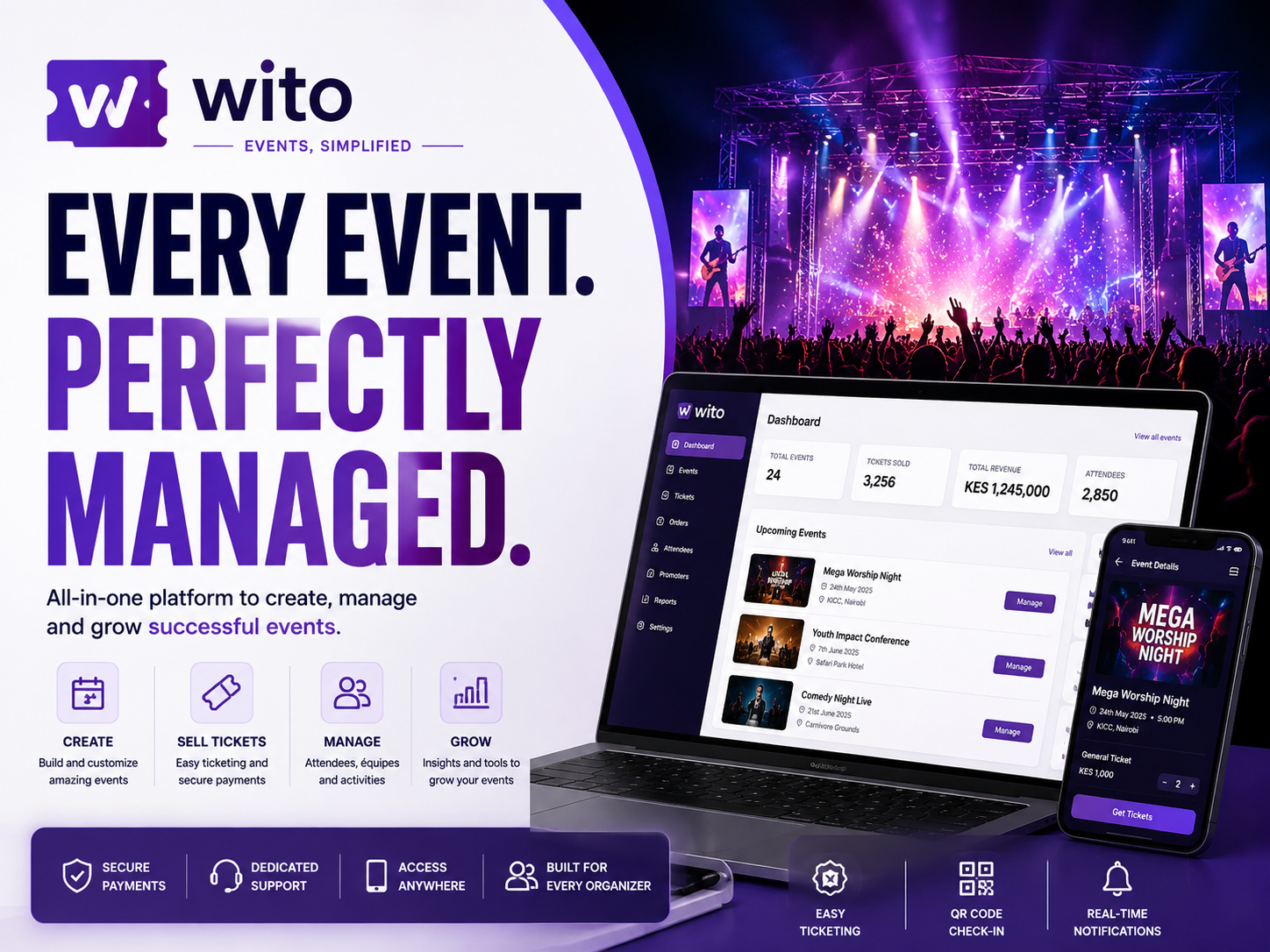
For organizations seeking an integrated solution, Wito combines online event registration, ticketing, QR code generation, attendee management, and a powerful event check-in system within a single platform. This enables event organizers to manage registrations, verify attendees, monitor attendance, and generate reports without relying on multiple disconnected tools.
How an Event Check-In System Improves Event Operations
A successful event depends on much more than attracting attendees. The real challenge begins when guests start arriving at the venue. Organizers must verify registrations, control access, direct attendees, monitor capacity, and ensure that entry remains smooth throughout the day. This is where an event check-in system becomes an essential part of modern event management.
Traditional methods of checking names against printed lists are slow and prone to mistakes. Staff members may struggle to locate attendee records, paper tickets can be misplaced, and manual attendance tracking often produces inaccurate reports. These problems become even more noticeable during large conferences, concerts, exhibitions, graduation ceremonies, and church conventions.
Implementing an event check-in system allows organizers to automate attendee verification while maintaining complete visibility over venue entry. Every successful check-in is recorded instantly, giving administrators live attendance statistics and reducing the workload for registration teams.
Whether an event welcomes one hundred guests or several thousand participants, digital check-in creates a faster, more organized, and more professional experience.
Supporting Different Types of Events
Every event has unique operational requirements. A business conference may need delegate badges and session tracking, while a music festival focuses on rapid crowd movement. Churches may verify worshippers for conferences, universities manage graduations, and NGOs organize stakeholder workshops.
A flexible event check-in system should support a wide variety of events, including:
- Business conferences
- Corporate seminars
- Music concerts
- Church conventions
- Christmas celebrations
- University graduations
- College orientations
- Charity fundraising events
- Government forums
- Trade exhibitions
- Product launches
- Sports tournaments
- Networking events
- Community festivals
- Award ceremonies
Because one platform can accommodate different event formats, organizations avoid purchasing separate software for different occasions.
Managing Multiple Entry Points
Large venues often have several entrances to reduce congestion.
A professional event check-in system allows multiple check-in teams to work simultaneously while sharing the same attendee database in real time.
This provides several advantages:
- Faster guest entry
- Reduced queues
- Consistent attendee verification
- Real-time synchronization
- Better security
- Balanced crowd distribution
Even when multiple entrances are used, organizers can monitor attendance from one centralized dashboard.
Offline Check-In Capabilities
Internet connectivity may occasionally become unreliable, particularly during outdoor events or in remote locations.
A dependable event check-in system should continue functioning even when internet access is temporarily unavailable.
Offline capabilities allow staff to:
- Continue scanning QR codes
- Verify registered attendees
- Record attendance locally
- Synchronize data automatically once connectivity returns
This ensures that entry operations continue without interruption.
Staff Coordination During Check-In
Event success depends heavily on effective teamwork.
Registration officers, security personnel, volunteers, customer service representatives, and event managers all require access to different information during check-in.
A quality event check-in system enables administrators to assign different permission levels for each staff member.
Examples include:
- Registration officers
- Security personnel
- Event supervisors
- Volunteer coordinators
- Customer support staff
- Technical administrators
Role-based access improves both security and operational efficiency by ensuring every team member sees only the information required for their responsibilities.
Real-Time Attendance Monitoring
One of the greatest advantages of an event check-in system is immediate visibility into attendance.
Organizers can monitor live statistics including:
- Total attendees checked in
- Remaining expected arrivals
- VIP attendance
- Speaker arrivals
- Staff attendance
- Volunteer attendance
- Peak arrival periods
- Venue occupancy
These insights help organizers make quick operational decisions, such as opening additional entrances or deploying more volunteers during busy periods.
Real-time reporting also improves communication between different event teams because everyone works from the same updated information.
Enhancing the Attendee Experience
The first few minutes after arriving at an event often determine how attendees perceive the entire experience.
A slow registration process can create frustration, while efficient digital check-in leaves a positive impression before the event even begins.
The event check-in system contributes to a better attendee experience through:
- Shorter waiting times
- Faster verification
- Mobile ticket support
- Contactless entry
- Professional organization
- Better crowd flow
- Reduced confusion
- Accurate event information
When attendees enter the venue quickly, they have more time to network, explore exhibitions, meet sponsors, or prepare for conference sessions.
Data Accuracy and Reporting
Manual attendance records frequently contain mistakes caused by handwriting, duplicate entries, or missing information.
Using an event check-in system ensures attendance is recorded automatically each time a ticket is successfully scanned.
Organizers gain access to detailed reports showing:
- Attendance percentages
- Registration conversions
- Entry times
- Session participation
- Capacity utilization
- No-show rates
- Staff activity
- Daily attendance summaries
These reports help organizations evaluate event performance while identifying opportunities for improvement.
Integration with Registration and Ticketing Platforms
The greatest value comes from using an event check-in system that integrates seamlessly with event registration and ticketing software.
Integrated systems eliminate duplicate data entry while ensuring attendee information remains consistent throughout the event lifecycle.
A connected platform supports:
- Event registration
- Online ticket sales
- QR code generation
- Payment confirmation
- Digital ticket delivery
- Check-in verification
- Attendance reporting
- Event analytics
This unified approach simplifies administration while reducing operational errors.
Why Wito Is an Excellent Choice
Organizations need more than a standalone check-in application. They require a complete event management solution capable of supporting planning, registration, ticketing, attendee communication, venue access, and reporting.
Wito provides an integrated platform that includes:
- Online event creation
- Custom registration forms
- Digital ticketing
- QR code generation
- Mobile-friendly registration
- Secure attendee management
- Real-time reporting
- Automated communications
- Event analytics
- Powerful event check-in system functionality
Whether you are organizing a church conference, university graduation, business seminar, exhibition, fundraising dinner, concert, or community festival, Wito enables organizers to manage the entire attendee journey from registration to final attendance reports through one centralized platform.
For organizations across Kenya, this integrated approach reduces administrative work while improving professionalism, operational efficiency, and attendee satisfaction.
Conclusion
An event check-in system has become an essential component of successful event management. It improves venue access, strengthens security, reduces waiting times, enhances attendee experiences, and provides organizers with accurate real-time attendance information.
As more organizations in Kenya adopt digital event management solutions, implementing a modern check-in platform is no longer a luxury but a necessity. From conferences and graduations to concerts, church conventions, and corporate meetings, the right solution helps organizers deliver efficient, secure, and memorable events.
Choosing an integrated platform like Wito ensures that event registration, ticketing, QR code verification, reporting, and attendee management work together seamlessly, providing a strong foundation for both current events and future growth.
Benefits of an Event Check-In System for Different Stakeholders
An event check-in system delivers value to everyone involved in planning and running an event. While many organizers initially implement a check-in solution to reduce queues and speed up entry, they quickly realize that it also improves communication, accountability, reporting, and the overall attendee experience. From event managers and registration teams to security personnel, sponsors, speakers, volunteers, vendors, and attendees, every stakeholder benefits from a faster and more organized process.
Whether the event is a business conference, church convention, university graduation, music concert, charity fundraiser, sports tournament, government forum, trade exhibition, or community festival, an event check-in system helps streamline operations from the moment attendees arrive at the venue.
Instead of relying on printed attendance sheets or manually searching for names, staff can verify registrations instantly using QR codes or digital tickets. This reduces administrative work, minimizes human error, and ensures that attendance records remain accurate throughout the event.
Across Kenya, organizations are increasingly adopting digital event technologies to improve efficiency, and a professional event check-in system is becoming a standard requirement for well-managed events.
Benefits for Event Organizers
Event organizers coordinate dozens of activities before and during an event. They oversee registrations, supervise entry points, communicate with attendees, manage staff, monitor attendance, and prepare post-event reports.
Without digital tools, these responsibilities can quickly become overwhelming, especially when dealing with hundreds or thousands of participants.
An event check-in system enables organizers to automate entry verification while maintaining complete visibility over attendance and venue activity.
Key benefits include:
- Faster attendee verification
- Real-time attendance tracking
- Reduced registration queues
- Automated attendance records
- Better crowd management
- Accurate reporting
- Multiple check-in locations
- QR code verification
- Improved operational efficiency
- Reduced paperwork
Because attendance information updates automatically, organizers spend less time handling manual processes and more time focusing on delivering a successful event.
Another advantage of an event check-in system is remote monitoring. Event managers can monitor attendance, entry activity, and venue occupancy from laptops, tablets, or smartphones, enabling quick decision-making throughout the event.
Benefits for Attendees
Attendees expect a simple and efficient arrival process. Long queues, manual registration desks, and paper ticket verification often create unnecessary frustration.
An event check-in system significantly improves the attendee experience by making entry fast and convenient.
Attendees benefit from:
- Quick QR code scanning
- Faster venue access
- Reduced waiting times
- Contactless entry
- Digital tickets
- Mobile-friendly check-in
- Improved event organization
- Better security
- Convenient registration verification
- Seamless arrival experience
A smooth check-in process creates a positive first impression and allows attendees to spend more time enjoying the event rather than waiting in line.
Benefits for Security Teams
Security personnel play a critical role in protecting attendees and maintaining order during events.
Using an event check-in system, security teams can verify attendees quickly while preventing unauthorized access.
Advantages include:
- Verification of valid tickets
- Prevention of duplicate entry
- Identification of unauthorized attendees
- Faster crowd movement
- Better access control
- Improved emergency attendance records
Real-time attendance information also supports emergency planning by providing accurate occupancy figures throughout the event.
Benefits for Registration Teams
Registration staff often experience the greatest workload during attendee arrival.
A professional event check-in system simplifies their responsibilities by automating ticket verification and attendance recording.
Registration teams can:
- Scan QR codes quickly
- Search attendee records instantly
- Resolve registration issues efficiently
- Monitor check-in progress
- Verify payment status
- Reduce manual paperwork
Automation enables staff to serve more attendees within shorter periods while maintaining accuracy.
Benefits for Universities and Educational Institutions
Educational institutions regularly organize graduations, conferences, alumni reunions, public lectures, innovation challenges, and career fairs.
Managing large numbers of students, parents, alumni, and invited guests requires efficient access control.
An event check-in system allows universities and colleges to:
- Verify graduation tickets
- Track attendance
- Manage multiple entry points
- Produce attendance reports
- Improve crowd control
- Enhance event security
These capabilities contribute to smoother event operations while reducing administrative effort.
Benefits for Churches and Faith-Based Organizations
Churches organize conferences, Christmas services, youth conventions, leadership seminars, worship concerts, and fundraising events throughout the year.
Large gatherings require efficient attendee management to avoid congestion and confusion.
An event check-in system enables churches to:
- Register worshippers online
- Verify attendees quickly
- Monitor attendance
- Coordinate volunteer teams
- Manage seating capacity
- Produce attendance reports
This allows church leaders to focus more on ministry while administrative processes run efficiently in the background.
Benefits for Businesses and Corporate Organizations
Corporate organizations host conferences, product launches, customer forums, networking sessions, employee training programmes, and annual meetings.
Professional attendee management contributes significantly to brand reputation.
An event check-in system helps businesses:
- Improve delegate experiences
- Monitor attendance
- Track VIP arrivals
- Coordinate multiple entrances
- Generate executive reports
- Improve operational efficiency
Businesses also benefit from attendance analytics that help evaluate event success and support future planning.
Improving Efficiency Through Automation
Automation is one of the greatest strengths of an event check-in system. Instead of relying on manual attendance registers, organizers can automate entry verification, attendance recording, and reporting.
Automation reduces repetitive work while improving consistency and accuracy.
Automatic Attendee Verification
When attendees arrive, staff simply scan their QR codes.
The event check-in system immediately verifies ticket validity and records attendance without requiring manual searches.
This reduces entry times while minimizing errors.
Instant Attendance Recording
Every successful scan automatically updates attendance records.
Organizers no longer need to reconcile paper attendance sheets after the event.
Real-time data provides immediate visibility into attendance levels and venue occupancy.
Automated Notifications
Some event platforms automatically notify organizers when VIP guests, speakers, sponsors, or special attendees check in.
This enables event managers to coordinate welcoming teams and schedule activities more effectively.
Live Dashboard Monitoring
Administrators can monitor:
- Total check-ins
- Remaining expected attendees
- Peak arrival periods
- Entry point activity
- Staff performance
- Venue occupancy
These live insights help organizers make operational decisions quickly while improving overall event coordination.
Compliance, Security, and Risk Management
As events become increasingly digital, compliance, security, and risk management are more important than ever. An event check-in system is not only designed to speed up attendee entry but also to protect sensitive information, strengthen venue security, and improve accountability throughout the event lifecycle. Whether an event hosts 100 or 10,000 attendees, organizers must ensure that registration records, ticket information, and attendance data are handled securely.
Manual attendance lists and paper tickets create unnecessary risks. They can be misplaced, duplicated, or altered, making it difficult to verify legitimate attendees. By implementing a professional event check-in system, organizations replace these outdated processes with secure digital verification that improves both efficiency and reliability.
Across Kenya, businesses, universities, churches, hotels, NGOs, and government institutions are increasingly prioritizing digital security when organizing events. As online registrations become the standard, investing in a secure check-in platform helps build attendee confidence while reducing operational risks.
Secure Attendee Verification
Verifying every attendee quickly and accurately is one of the primary responsibilities during event entry.
A modern event check-in system ensures that every ticket presented at the entrance is validated against the registration database before access is granted.
Secure verification provides several advantages:
- Prevents duplicate ticket use
- Detects invalid registrations
- Identifies cancelled tickets
- Verifies payment status
- Confirms attendee identity
- Improves access control
- Strengthens overall event security
Because every attendee receives a unique QR code or digital identifier, organizers can confidently manage access while reducing opportunities for fraud.
Protecting Attendee Data
Every event collects valuable information such as names, email addresses, telephone numbers, organization details, and attendance records.
A professional event check-in system should store this information securely using encrypted cloud infrastructure and secure authentication methods.
Important data protection features include:
- Encrypted communication
- Secure cloud storage
- Automatic backups
- User authentication
- Role-based permissions
- Activity logs
- Controlled administrator access
These safeguards help organizations protect attendee information while ensuring that only authorized staff members can access sensitive records.
Role-Based User Permissions
Large events often involve registration teams, volunteers, security officers, finance staff, technical teams, and event managers.
A quality event check-in system allows administrators to assign different permission levels according to each person’s responsibilities.
Typical user roles include:
- Event Administrator
- Registration Officer
- Security Personnel
- Volunteer Coordinator
- Technical Support
- Customer Service
- Finance Officer
- Event Supervisor
Restricting access reduces operational risks while protecting confidential attendee and financial information.
Cloud Backup and Business Continuity
Unexpected technical issues can occur during any event. Hardware failures, accidental data deletion, or temporary connectivity problems should never prevent attendees from entering the venue.
An event check-in system with automatic cloud backups allows organizers to restore event information quickly while maintaining uninterrupted operations.
Cloud-based systems also provide historical attendance records that help organizations compare event performance over multiple years.
Why Wito Is the Ideal Solution
Successful event management requires more than simply scanning tickets at the entrance. Organizers need one platform that manages registrations, ticketing, attendee communication, check-in, reporting, and analytics.
Wito provides a complete event management platform designed to simplify every stage of the event lifecycle.
Whether you’re organizing:
- Conferences
- Church conventions
- University graduations
- Corporate seminars
- Music concerts
- Charity fundraisers
- Government forums
- Trade exhibitions
- Sports competitions
- Community festivals
Wito combines powerful event check-in system capabilities with a comprehensive registration and ticketing solution.
Key features include:
- Online event creation
- Custom registration forms
- Digital ticket generation
- QR code ticketing
- Mobile-friendly registration
- Fast attendee check-in
- Multiple entry point support
- Attendance tracking
- Real-time dashboards
- Automated email notifications
- Financial reporting
- Event analytics
- Multi-user administration
Designed with the Kenyan market in mind, Wito supports organizations looking for an efficient, scalable, and professional event management platform.
Future Trends in Event Check-In Technology
Technology continues to transform the event industry, and the event check-in system of the future will become even more intelligent, secure, and automated.
Artificial Intelligence
Artificial intelligence will help event organizers:
- Predict attendee arrival patterns
- Allocate staff more efficiently
- Detect unusual check-in activity
- Improve crowd management
- Automate attendee support
- Generate operational insights
These capabilities will improve decision-making while reducing manual intervention.
Contactless Event Experiences
Contactless technology is becoming increasingly popular for conferences, exhibitions, concerts, and corporate events.
Future event check-in system platforms will continue expanding support for:
- Mobile QR codes
- Digital wallets
- NFC badges
- Facial recognition (where appropriate and compliant)
- Self-service kiosks
These technologies reduce physical contact while accelerating attendee entry.
Advanced Analytics
Event organizers increasingly rely on data to improve future events.
Future reporting capabilities will provide deeper insights into:
- Arrival patterns
- Queue performance
- Attendance behaviour
- Session participation
- Venue occupancy
- Staff productivity
These analytics will help organizations optimize future event planning.
Integration Across Event Technology
Modern event management increasingly depends on connected systems.
Future event check-in system solutions will integrate more closely with:
- CRM platforms
- Marketing automation
- Payment gateways
- Badge printing
- Mobile event apps
- Customer support platforms
This integrated approach will reduce duplicate work while improving operational efficiency.
Getting Started
Choosing the right event check-in system begins by understanding your organization’s event requirements.
Before selecting a platform, ask:
- How many attendees do we typically manage?
- How many entrances will the venue have?
- Do we require offline check-in?
- Will QR codes be used?
- Do we need mobile check-in?
- How many staff members require access?
- Which reports are important?
- Do we need integration with ticketing software?
- Can the platform grow as our events expand?
Answering these questions helps identify a solution that supports both current operational requirements and future growth.
Organizations should also conduct trial events, train staff before major events, and test equipment such as scanners, smartphones, or tablets to ensure smooth implementation.
Final Conclusion
An event check-in system is now a fundamental component of successful event management. It improves attendee verification, accelerates venue entry, strengthens security, enhances reporting, and provides organizers with the real-time information needed to manage events efficiently.
Across Kenya, organizations are increasingly replacing manual attendance processes with digital solutions that improve professionalism and operational efficiency. Whether hosting conferences, graduations, concerts, exhibitions, church conventions, or fundraising events, implementing a reliable check-in platform creates a better experience for both organizers and attendees.
Wito brings together online registration, digital ticketing, QR code verification, attendee management, reporting, and a powerful event check-in system within one integrated platform. By adopting a modern solution like Wito, organizations can confidently manage events of every size while preparing for future growth and delivering outstanding attendee experiences.