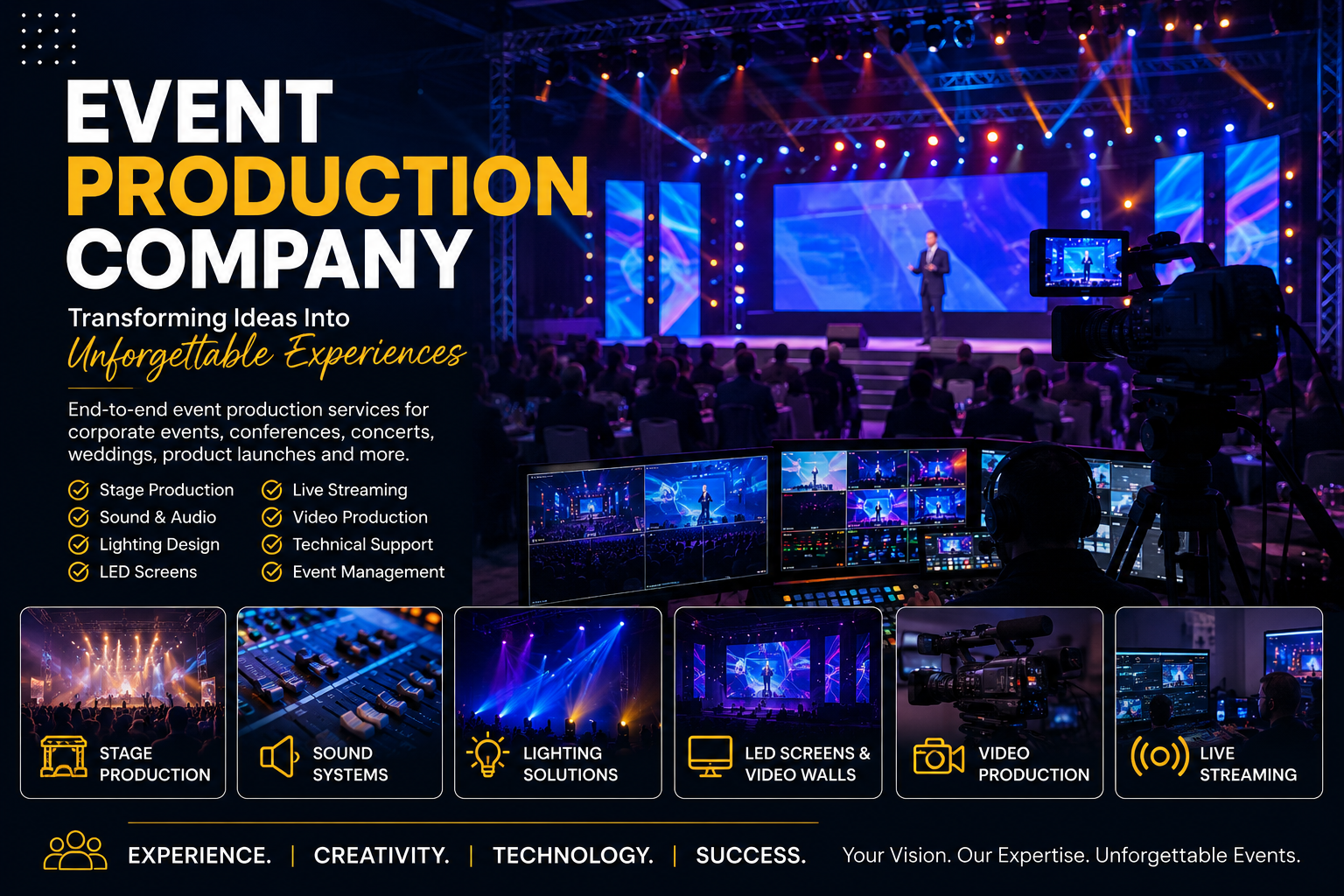
professional event lighting can completely transform the atmosphere, appearance, and overall experience of an event. Whether you are organizing a corporate conference, wedding, concert, church service, product launch, graduation, exhibition, awards ceremony, gala dinner, or outdoor activation, the right lighting can make the venue look more attractive while ensuring that speakers, performers, products, and important moments are clearly visible.
Lighting is much more than simply illuminating a stage. A well-designed lighting system can create atmosphere, highlight important areas, support branding, improve photographs and videos, guide audience attention, and work together with sound, staging, LED screens, and other event production elements.
For event organizers in Kenya, understanding the different types of lighting and how they are used can make it easier to plan an event that looks professional without spending money on equipment that does not match the venue or occasion.
This guide explores the fundamentals of professional event lighting, the most commonly used lighting equipment, different lighting applications, venue considerations, and the factors to consider when hiring an event lighting provider.
What Is Professional Event Lighting?
professional event lighting refers to the use of specialized lighting equipment, control systems, fixtures, and technical expertise to illuminate and enhance an event environment.
Unlike ordinary household or venue lighting, professional event lighting is specifically designed for temporary productions and large spaces.
It can be used to illuminate:
- Stages
- Speakers
- Performers
- Dance floors
- Tables
- Backdrops
- Exhibition booths
- Products
- Walkways
- Entrance areas
- Architectural features
- Outdoor spaces
The lighting can also be programmed to change throughout an event.
For example, a corporate conference may use bright, neutral lighting during presentations and more dynamic lighting during entertainment sessions.
A wedding may use warm lighting during dinner and colorful effects during the reception.
A concert may use moving lights, strobes, washes, and effects synchronized with music.
This flexibility is one of the reasons professional event lighting has become such an important component of modern event production.
Why Event Lighting Matters
Lighting affects how people perceive a venue.
A plain hall can be transformed into an attractive event environment through carefully positioned lights.
A stage can become a focal point.
A product can receive additional attention.
A speaker can be illuminated clearly.
A dance floor can become more energetic.
A wedding reception can become warmer and more intimate.
Lighting also affects photography and video production.
If a stage is poorly illuminated, photographs can appear dark or uneven.
If lighting is excessively bright or incorrectly positioned, cameras may struggle with exposure.
Good professional event lighting therefore needs to consider both the physical audience and cameras being used at the event.
Lighting Is Part of the Overall Event Design
Event lighting should not be planned separately from the rest of the production.
It should work with:
- Stage design
- Sound systems
- LED screens
- Trussing
- Branding
- Draping
- Furniture
- Floral arrangements
- Venue architecture
- Cameras
- Livestreaming
For example, if an LED screen is installed behind a stage, the lighting should complement the visuals rather than make the screen difficult to see.
Similarly, lighting around a speaker should provide enough illumination without causing glare on presentation screens.
This coordinated approach is a key part of effective professional event lighting.
Types of Events That Need Professional Lighting
Almost any event can benefit from professionally planned lighting.
Corporate Events
Corporate events often need clean and professional lighting.
Conferences, seminars, award ceremonies, annual general meetings, product launches, and corporate dinners can all benefit from stage lighting and venue illumination.
Lighting can be used to highlight:
- Speakers
- Company logos
- Presentation areas
- Product displays
- Stage backdrops
- Sponsors
- Award recipients
The lighting design should normally reflect the company’s brand and the tone of the event.
Weddings
Weddings are among the most popular applications of event lighting.
Lighting can help create a romantic, elegant, modern, luxurious, or energetic atmosphere.
Wedding lighting may include:
- Uplighting
- Fairy lights
- String lights
- LED fixtures
- Moving heads
- Dance-floor lighting
- Stage lighting
- Table lighting
- Pin spots
During dinner, softer lighting can create an intimate atmosphere.
During dancing, dynamic lighting can make the reception more energetic.
A professional lighting team can program different looks for different parts of the wedding.
Concerts
Concerts require more advanced lighting systems.
Lighting is often synchronized with music and stage performance.
A concert lighting setup may include:
- Moving head fixtures
- LED washes
- Spotlights
- Strobes
- Beam fixtures
- Follow spots
- Backlights
- Front lights
- Effects lighting
The lighting designer or operator can change colors, movement, intensity, and effects throughout the performance.
For major concerts, professional event lighting becomes an important part of the artistic presentation.
Conferences
Conferences require lighting that prioritizes visibility.
Speakers need to be clearly visible to the audience and cameras.
The stage may require:
- Front lighting
- Key lighting
- Backlighting
- Stage washes
- Podium lighting
- LED screen illumination
Lighting should also be consistent throughout presentations.
A speaker moving from a podium to another part of the stage should remain visible.
Church Events
Churches can use event lighting for services, worship nights, conferences, concerts, youth programs, and special celebrations.
Lighting can help create different environments during different parts of the service.
For example:
- Bright lighting for preaching
- Soft lighting during prayer
- Dynamic lighting during worship
- Stage washes during performances
- Accent lighting during special ceremonies
The lighting should support the purpose of the service rather than distract the congregation.
Main Types of Event Lighting
There are many different lighting fixtures available for event production.
Each type has a specific purpose.
Understanding these fixtures can help you make better decisions when planning professional event lighting.
Stage Lighting
Stage lighting is designed to illuminate performers and speakers.
The most basic stage lighting setup may include fixtures positioned in front of the stage to illuminate people’s faces.
More advanced systems can add side lighting, backlighting, washes, moving fixtures, and effects.
Good stage lighting should provide sufficient visibility while creating visual depth.
Front Lighting
Front lighting illuminates performers and speakers from the front.
It is particularly important for:
- Conferences
- Corporate presentations
- Theater
- Church services
- Award ceremonies
- Interviews
Without adequate front lighting, faces may appear dark.
Front lighting is also important for cameras.
A camera needs enough light to produce clear and properly exposed footage.
Backlighting
Backlighting comes from behind the performer.
It can create separation between the subject and the background.
This makes the stage look more three-dimensional.
Backlighting is frequently used in concerts, theater, corporate events, and worship productions.
It can also create dramatic silhouettes when intentionally designed that way.
Side Lighting
Side lighting illuminates performers from the sides.
It can help create depth and highlight movement.
Side lighting is especially useful for:
- Dance performances
- Theater
- Concerts
- Fashion shows
Combining front, side, and back lighting can create a more sophisticated stage appearance.
Moving Head Lights
Moving head fixtures are among the most versatile tools used in modern event production.
They can move horizontally and vertically while changing colors, patterns, focus, and intensity.
Depending on the fixture, moving heads can produce:
- Beams
- Washes
- Spot effects
- Patterns
- Dynamic movements
They are commonly used for concerts, weddings, parties, corporate events, and stage productions.
During professional event lighting, moving heads can be programmed to create different looks throughout the event.
Beam Lights
Beam fixtures produce narrow, concentrated beams of light.
They can create dramatic effects, especially in darker venues.
Beam lights are often used in concerts, festivals, parties, and entertainment events.
Haze or atmospheric effects can make the beams more visible by allowing light to interact with particles in the air.
However, atmospheric effects should be used appropriately and according to the venue’s rules.
Wash Lights
Wash fixtures produce broad areas of colored or white light.
They are useful for covering:
- Stages
- Backdrops
- Walls
- Dance floors
- Large areas
Wash lights are often used as the foundation of a lighting design.
Several fixtures can be positioned around a stage to create consistent color coverage.
LED Par Lights
LED par lights are compact fixtures that can produce different colors and levels of brightness.
They are commonly used for:
- Stage washes
- Uplighting
- Backdrops
- Weddings
- Conferences
- Church events
- Parties
They are popular because they can provide colorful lighting while remaining relatively flexible for temporary installations.
Spotlights
Spotlights focus light on a particular area.
They can be used to highlight:
- Speakers
- Performers
- Products
- Award recipients
- Wedding couples
- Stage entrances
A spotlight can direct audience attention toward an important part of the program.
For example, during an awards ceremony, a spotlight can help emphasize the person receiving an award.
Follow Spots
Follow spots are designed to track moving performers.
They are especially useful for concerts, theater, and large stage productions.
An operator manually follows the performer with the light.
For large performances, multiple follow spots may be used.
Uplighting
Uplighting involves positioning fixtures near the floor and directing light upward.
It is often used to illuminate walls, columns, curtains, and architectural features.
Uplighting can transform the appearance of a venue without requiring extensive structural changes.
For weddings, colors can be selected to complement the event’s theme.
For corporate events, colors can be matched with the company’s branding.
This makes uplighting a popular element of professional event lighting.
Decorative Lighting
Not all event lighting is focused on the stage.
Decorative lighting can help create the overall atmosphere of a venue.
Examples include:
- String lights
- Fairy lights
- Chandeliers
- LED candles
- Lanterns
- Table lights
- Architectural lighting
- Accent lights
Decorative lighting can be especially effective for weddings, gala dinners, exhibitions, and themed events.
Architectural Lighting
Architectural lighting highlights physical features of a venue.
It can be used on:
- Walls
- Columns
- Ceilings
- Buildings
- Trees
- Entrance structures
- Decorative installations
Outdoor architectural lighting can make an event venue visually attractive after sunset.
Intelligent Lighting
Intelligent lighting fixtures can be controlled digitally.
Operators can adjust:
- Color
- Intensity
- Movement
- Beam angle
- Patterns
- Timing
This allows the lighting team to create complex sequences.
For concerts, intelligent fixtures can change in synchronization with music.
For corporate events, they can be programmed for different sections of the event.
DMX Lighting Control
DMX is a common control protocol used in professional lighting.
A lighting console can communicate with compatible fixtures and control their parameters.
A technician can create lighting scenes and cues for different moments.
For example:
Scene 1: Audience arrival
Scene 2: Opening presentation
Scene 3: Keynote speech
Scene 4: Product reveal
Scene 5: Entertainment
Scene 6: Closing
This creates a more organized lighting experience.
Lighting Consoles
A lighting console gives the operator control over lighting fixtures.
Basic systems may use simple controllers.
More complex events may require professional lighting consoles capable of controlling many fixtures simultaneously.
The console can manage:
- Intensity
- Color
- Movement
- Effects
- Timing
- Scenes
- Cues
For major events, the lighting operator can prepare the show in advance.
Lighting and Event Branding
Lighting can reinforce a company’s visual identity.
Brand colors can be incorporated into the lighting design.
For example, a company with a specific brand color may use that color to illuminate the stage backdrop, entrance, or venue walls.
However, lighting colors should be balanced with other visual elements.
If the LED screen, stage graphics, and lighting all use competing colors, the overall design can become confusing.
Good professional event lighting should support the event’s visual identity.
Lighting for Product Launches
Product launches benefit from carefully controlled lighting.
Lighting can be used to direct attention toward the product at the moment of reveal.
For example, the stage may remain relatively dark while an introductory video plays.
The product can then be highlighted with focused lighting during the reveal.
This creates a stronger visual moment.
Lighting can also be used to illuminate product displays after the main presentation.
Lighting for Awards Ceremonies
Awards ceremonies often require controlled lighting transitions.
The lighting may shift when:
- Nominees are announced
- Winners are revealed
- Recipients walk onto the stage
- Photos are taken
- Performances begin
Spotlights can emphasize award recipients.
Stage washes can provide consistent illumination.
Background lighting can maintain the visual theme.
Outdoor Event Lighting
Outdoor events require additional planning.
The lighting team needs to consider:
- Weather
- Power
- Ground conditions
- Audience movement
- Structures
- Safety
- Visibility
- Installation locations
Outdoor lighting can be used to illuminate stages, pathways, buildings, trees, entrances, and audience areas.
For evening events, lighting also contributes to safety by helping people navigate the venue.
Power Requirements
Lighting equipment requires electricity.
Large productions may use dozens of fixtures.
The power requirements can therefore be significant.
Before installation, the technical team should determine the available electrical capacity.
For outdoor events, generators may be required.
The power plan should account for other equipment such as:
- Sound systems
- LED screens
- Catering equipment
- Production equipment
- Charging stations
A professional production team should calculate and coordinate these requirements before the event.
Lighting Truss
Trussing is often used to suspend lighting fixtures above a stage.
A truss system can support:
- Moving heads
- LED pars
- Spotlights
- Speakers
- LED elements
- Decorative fixtures
The structure must be properly selected and installed.
Safety is particularly important because equipment is suspended above performers and audiences.
Only appropriate equipment and qualified personnel should be used for truss installation.
Safety in Event Lighting
Safety should always be a major consideration.
Lighting fixtures can be heavy.
They can also become hot depending on the technology being used.
Cables can create trip hazards if they are not properly secured.
Suspended equipment needs appropriate rigging and support.
A professional lighting team should follow suitable installation and safety procedures.
Lighting for Cameras and Livestreaming
Modern events often involve photography, video production, or livestreaming.
This changes the lighting requirements.
Lighting that looks attractive to the audience may not necessarily produce the best camera image.
Cameras require controlled exposure and consistent illumination.
For livestreams, the lighting should avoid:
- Excessive shadows
- Overexposed faces
- Rapid brightness changes
- Extremely saturated colors
- Direct glare into camera lenses
When planning professional event lighting, tell the provider if cameras or livestreaming will be used.
Lighting and LED Screens
LED screens and event lighting are frequently used together.
An LED screen may display presentations, videos, graphics, or live camera feeds while lighting creates the surrounding stage environment.
The lighting must be carefully balanced.
If front lights are too bright, they may affect the screen’s visual impact.
If the screen is extremely bright while the stage is dark, performers may appear poorly exposed on camera.
Coordination between the lighting and video teams is therefore essential.
Lighting and Sound
Lighting can also be synchronized with audio.
During a concert, lighting cues can follow musical sections.
For example, lighting can change during:
- Intro
- Verse
- Chorus
- Solo
- Breakdown
- Finale
This synchronization can create a more immersive audience experience.
For live productions, the lighting operator and sound team should work from the same event schedule.
Choosing the Right Lighting Package
The appropriate lighting package depends on:
- Event type
- Venue size
- Audience size
- Stage dimensions
- Event duration
- Indoor or outdoor location
- Branding requirements
- Camera requirements
- Entertainment requirements
- Budget
A small conference does not need the same lighting system as a concert.
A wedding may prioritize decorative atmosphere.
A product launch may prioritize stage focus.
An outdoor concert may require powerful moving fixtures and large-scale coverage.
Why Professional Event Lighting Is Worth the Investment
Professional lighting can improve the appearance and functionality of an event.
It can make speakers easier to see.
It can enhance photographs.
It can create atmosphere.
It can strengthen branding.
It can guide audience attention.
It can support performances.
It can make a venue look more sophisticated.
For these reasons, professional event lighting should be considered an important part of the overall event production budget rather than an optional decoration.
Working With an Event Lighting Provider
When hiring a lighting company, explain your event requirements clearly.
Provide information about:
- Venue
- Date
- Audience size
- Stage
- Event schedule
- Theme
- Brand colors
- Camera requirements
- LED screens
- Sound system
- Entertainment
- Outdoor or indoor location
A professional provider can then recommend a lighting configuration based on the actual requirements.
Avoid selecting fixtures simply because they look impressive in photographs.
The equipment needs to be appropriate for your venue and event.
Professional Event Lighting: Costs, Packages, Equipment and Planning Guide for Events in Kenya
professional event lighting is an essential part of modern event production because it combines visibility, atmosphere, branding, and visual presentation. Whether an event is taking place in a hotel ballroom, conference center, church, outdoor venue, wedding garden, exhibition hall, or concert ground, lighting can significantly influence how the audience experiences the space.
In Part 1, we explored the fundamentals of event lighting, including moving heads, LED PAR lights, spotlights, wash lights, uplighting, intelligent lighting, stage lighting, outdoor lighting, and the relationship between lighting, sound, LED screens, and cameras.
Part 2 focuses on the practical side of planning. We will examine event lighting costs, equipment packages, venue considerations, lighting requirements for different events, power and rigging, technical support, and how to choose the right lighting provider in Kenya.
What Determines Event Lighting Cost?
The cost of professional event lighting depends on several factors. There is no single price that applies to every event because lighting requirements can vary significantly.
A small corporate meeting may only need basic stage illumination, while a large concert may require dozens of intelligent fixtures, moving heads, follow spots, trussing, lighting consoles, technicians, power distribution, and additional equipment.
Some of the main factors that influence pricing include:
- Number of lighting fixtures
- Type of lighting fixtures
- Venue size
- Stage dimensions
- Event duration
- Indoor or outdoor location
- Number of technicians
- Trussing requirements
- Rigging requirements
- Power requirements
- Transportation
- Installation
- Programming
- On-site operation
- Event complexity
- Special effects
When requesting a quotation, provide detailed information about your event so the provider can recommend an appropriate package.
Basic Event Lighting Packages
A basic package is suitable for smaller events that mainly require visibility and simple atmosphere.
It may include:
- LED PAR lights
- Basic stage lights
- Lighting stands
- Simple lighting controller
- Cables
- Power distribution
- Installation
This type of setup can work well for small meetings, presentations, private celebrations, workshops, and simple indoor events.
The objective is not to create a complicated lighting show but to ensure that the stage and important areas are clearly illuminated.
Standard Event Lighting Packages
A standard lighting package can provide more flexibility.
It may include:
- LED PAR fixtures
- Moving head lights
- Stage wash lights
- Uplighting
- Lighting controller
- Trussing or stands
- Cables
- Power distribution
- Lighting technician
This type of package can work well for weddings, conferences, corporate events, award ceremonies, church programs, and medium-sized celebrations.
The lighting can be programmed to change between different sections of the event.
Premium Event Lighting Packages
Large productions often require more advanced equipment.
A premium package may include:
- Multiple moving heads
- Beam fixtures
- Wash fixtures
- Spot fixtures
- Follow spots
- LED PARs
- Strobes
- Intelligent lighting
- Large lighting consoles
- Trussing
- Rigging
- Haze equipment
- Dedicated lighting operators
- Backup fixtures
Such systems are more appropriate for concerts, festivals, major product launches, large corporate functions, gala dinners, and high-profile entertainment events.
The complexity of the production determines how many fixtures and technicians are needed.
Lighting Packages Should Match the Venue
The size and design of the venue are extremely important.
A small ballroom may require only a few fixtures to achieve excellent coverage.
A large conference hall may need multiple lighting positions.
An outdoor venue may require much more powerful fixtures because there are no walls or ceilings to contain the light.
Before selecting professional event lighting, the provider should understand the venue layout.
Important details include:
- Ceiling height
- Stage dimensions
- Audience seating
- Wall positions
- Existing lighting
- Power outlets
- Rigging points
- Entrance locations
- Camera positions
- LED screen placement
Venue Inspection
A venue inspection can help identify potential technical challenges.
During an inspection, the lighting provider can determine where fixtures can be positioned and how cables can be routed.
For larger events, the team can also identify suitable locations for trussing, control consoles, power distribution, and technical operators.
Venue inspection is particularly valuable for unfamiliar locations.
Indoor Lighting Requirements
Indoor venues generally provide more control over the lighting environment.
The technical team can control the relationship between the event lighting and existing venue lights.
Existing lights may need to be dimmed or switched off if they interfere with the desired design.
The team should also consider:
- Ceiling height
- Wall colors
- Reflective surfaces
- Windows
- Curtains
- Existing chandeliers
- Emergency lighting
- Camera positions
A carefully controlled indoor environment allows the lighting designer to create more consistent results.
Outdoor Lighting Requirements
Outdoor events present different challenges.
The environment may have no ceiling or walls, so fixtures need to be positioned carefully.
Outdoor lighting may be required for:
- Main stages
- Walkways
- Entrances
- Seating areas
- Buildings
- Trees
- Branding
- Product displays
- Backdrops
Weather protection is also important.
The lighting team should consider possible rain, wind, dust, and changing environmental conditions.
Wedding Lighting Packages
Wedding lighting can be highly customized.
The couple may want elegant lighting for the ceremony and reception, followed by more dynamic lighting during dancing.
A wedding package could include:
- Warm uplighting
- LED PAR fixtures
- Moving heads
- Dance-floor lighting
- Backdrop lighting
- Table accent lighting
- Pin spots
- Fairy lights
- String lights
- Stage lighting
Colors can be selected to complement the wedding theme.
Soft warm tones can create an elegant dinner atmosphere, while stronger colors can be introduced during entertainment.
Lighting for the Wedding Reception
The reception usually has several different stages.
During dinner, lighting may be relatively subtle.
During speeches, the focus should move toward the person speaking.
During the first dance, the lighting may become softer and more focused.
During entertainment, moving heads and dynamic effects can create more energy.
A programmable lighting system allows these changes to happen smoothly.
Corporate Event Lighting Packages
Corporate events generally require professional but controlled lighting.
The goal is often to make speakers, branding, products, and presentations highly visible.
A corporate package may include:
- Front lighting
- Stage wash
- Logo uplighting
- Backlighting
- Podium lighting
- Moving heads
- LED screen lighting
- Camera-friendly lighting
For major conferences, the lighting operator may prepare cues for each speaker and presentation.
Conference Lighting
Conference lighting requires particular attention to facial visibility.
Speakers should be properly illuminated without causing harsh shadows.
The stage should also be evenly lit so cameras can capture clear images.
A typical conference setup might include:
- Front wash
- Back wash
- Podium lighting
- Stage accent lighting
- LED screen support lighting
- Audience lighting
When planning professional event lighting, conference organizers should mention whether the event will be photographed or streamed.
Product Launch Lighting
Product launches often use lighting to build anticipation.
The product may initially remain partially hidden or displayed in a controlled environment.
During the reveal, focused lighting can direct attention toward it.
Moving heads, spotlights, LED fixtures, and programmed cues can all contribute to the reveal.
Lighting can also reinforce the company’s brand colors.
The objective is to create a memorable visual moment without making the lighting overpower the product itself.
Awards Ceremony Lighting
Awards ceremonies benefit from carefully timed lighting cues.
Lighting can change when a nominee is announced, when a winner is revealed, and when the recipient walks onto the stage.
A spotlight can be used to highlight the winner.
Stage washes can ensure that photographs taken during the award presentation are properly illuminated.
This requires coordination between the lighting operator, MC, stage manager, and event organizer.
Concert Lighting Packages
Concerts typically require more advanced lighting than conferences.
The lighting system may need to support different artists, songs, performances, and moods.
A concert setup can include:
- Moving head beams
- Moving head washes
- Spot fixtures
- LED PARs
- Strobes
- Follow spots
- Backlights
- Side lights
- Audience lights
- Haze effects
The lighting operator may run the show manually or use pre-programmed cues.
Lighting for DJs and Entertainment
DJ events often benefit from dynamic lighting.
Moving heads, beams, strobes, washes, and LED fixtures can create an energetic dance environment.
Lighting effects can be synchronized with music or controlled manually.
For smaller parties, a simpler package may be sufficient.
For large entertainment events, multiple fixture types can create more complex visual effects.
Church and Worship Lighting
Church events require a balance between atmosphere and visibility.
A worship service may involve:
- Preaching
- Singing
- Choirs
- Instrumental performances
- Prayer
- Presentations
- Special ceremonies
The lighting can change according to the program.
For preaching, front lighting should provide excellent facial visibility.
During worship, color washes and stage effects can create atmosphere.
The lighting should always support the service rather than become a distraction.
Lighting for Exhibitions
Exhibitions and trade shows often have multiple booths competing for attention.
Lighting can help exhibitors make their displays more visible.
Spotlights can highlight products.
LED fixtures can illuminate branded walls.
Accent lighting can draw attention to important displays.
For large exhibitions, each booth may require its own lighting plan.
Lighting for Gala Dinners
Gala dinners require an atmosphere that is elegant and comfortable.
Lighting can be used to illuminate:
- Dining tables
- Stage
- Dance floor
- Entrance
- Centerpieces
- Branding
- Architectural features
Warm lighting can create an intimate environment.
More dynamic lighting can be introduced during entertainment.
The lighting should be bright enough for guests to interact while remaining visually comfortable.
Uplighting Packages
Uplighting is one of the simplest ways to transform a venue.
Fixtures can be positioned along walls and programmed to create a consistent color.
Uplighting can be used for:
- Weddings
- Corporate dinners
- Conferences
- Awards
- Product launches
- Parties
The number of fixtures required depends on the size and layout of the venue.
Stage Wash Packages
A stage wash provides general illumination across the performance area.
It is often created using several LED fixtures positioned at different angles.
A good stage wash provides consistent lighting across the entire stage.
It can also use different colors for different sections of the event.
Moving Head Packages
Moving heads add movement and flexibility.
Depending on the fixture, they can provide:
- Beam effects
- Wash effects
- Spot effects
- Gobos
- Color changes
- Pan and tilt movement
- Zoom
They are especially useful for concerts, weddings, entertainment events, and large corporate productions.
The number of moving heads required depends on stage size and desired visual complexity.
Follow Spot Packages
Follow spots are useful when a performer needs to remain highlighted while moving around the stage.
They are particularly useful for:
- Concerts
- Theatre
- Award ceremonies
- Large corporate events
- Fashion shows
An operator manually follows the subject.
For large productions, multiple follow spots may be required.
Lighting Control Systems
Lighting fixtures need to be controlled.
Simple events can use basic controllers, while complex productions require professional lighting consoles.
A lighting console can manage hundreds of channels depending on the system.
The operator can create scenes, cues, effects, color changes, movement sequences, and transitions.
Programming the Lighting Show
For large events, the lighting operator can prepare the show before the event begins.
The event schedule can be divided into cues.
For example:
Cue 1: Guest arrival
Cue 2: Opening
Cue 3: Keynote speaker
Cue 4: Presentation
Cue 5: Product reveal
Cue 6: Entertainment
Cue 7: Closing
This ensures that lighting transitions happen at the appropriate moments.
Lighting and Music Synchronization
Music synchronization can make entertainment productions more immersive.
Lighting effects can change according to the tempo or sections of a song.
For concerts, this may involve detailed programming.
For parties, the lighting operator may use automated effects.
Synchronization should be used carefully so that it enhances rather than overwhelms the performance.
Haze and Atmospheric Effects
Some lighting fixtures become more visually impressive when haze is present.
Haze allows beams of light to become visible through the air.
This can create dramatic effects for concerts, weddings, clubs, and entertainment productions.
However, haze use should always comply with venue policies and safety requirements.
Power Planning
Power is an important part of professional event lighting.
Each fixture consumes electricity, and large lighting systems can require substantial power.
The production team should calculate the expected load before installation.
Power requirements may need to include:
- Lighting
- Sound
- LED screens
- Cameras
- Production equipment
- Catering
- Other event equipment
For outdoor events, a generator may be required.
Generator Planning
A generator should have sufficient capacity for the equipment being powered.
It should also provide stable power.
The event production team should coordinate generator requirements rather than having each supplier independently estimate power.
This helps prevent overloads and interruptions.
Trussing and Rigging
Large lighting systems are frequently mounted on trussing.
Truss structures can be used to suspend:
- Moving heads
- Wash fixtures
- Beam lights
- LED fixtures
- Spotlights
- Decorative elements
Rigging must be performed properly.
The weight of the fixtures and the structure itself must be considered.
Only suitable equipment and qualified personnel should handle suspended installations.
Lighting Stands
Not every event requires trussing.
Smaller events may use lighting stands.
Stands can support LED fixtures, moving heads, and other equipment.
They are useful when the venue does not have suitable rigging points.
However, stands need to be positioned securely and safely.
Lighting Technician Requirements
The complexity of the event determines the number of technicians required.
A small event may require one lighting technician.
A major concert may require:
- Lighting designer
- Lighting programmer
- Lighting operator
- Rigging crew
- Stage technicians
- Electricians or power technicians
Larger productions require more coordination.
Setup and Installation
Lighting installation can take significant time.
The team may need to:
- Unload equipment.
- Position stands or trusses.
- Install fixtures.
- Connect cables.
- Configure control systems.
- Address power requirements.
- Program lighting cues.
- Focus fixtures.
- Test the system.
- Conduct a final rehearsal.
Large productions should therefore have sufficient setup time.
Lighting Focus
After fixtures are installed, they need to be aimed correctly.
This process is known as focusing.
The technician ensures that lights point toward the appropriate areas.
For example, a spotlight may need to focus on a podium.
A wash light may need to cover the entire stage.
An uplight may need to cover a particular wall.
Correct focusing is essential for good results.
Lighting Rehearsal
A rehearsal gives the lighting team an opportunity to test cues.
This is especially important for:
- Concerts
- Awards
- Product launches
- Theatre
- Church productions
- Major corporate events
The team can confirm that lighting changes occur at the right time.
Backup Lighting Equipment
Major events should have backup plans.
A backup fixture can be useful if a light fails.
Additional cables and power supplies can also prevent minor equipment problems from becoming major disruptions.
For high-profile events, the provider should discuss contingency planning before the event.
How to Compare Lighting Companies
When comparing suppliers, consider more than equipment quantity.
Ask about:
- Previous experience
- Equipment quality
- Technical team
- Setup process
- Lighting design
- Programming
- Transportation
- Backup equipment
- Rigging
- Safety procedures
- Event-day support
A supplier with fewer fixtures but strong technical expertise may produce better results than a company offering a large equipment list without proper design.
Questions to Ask Before Hiring
Before booking professional event lighting, ask the provider:
- What fixtures are included?
- How many fixtures will be supplied?
- Is a lighting technician included?
- Is setup included?
- Is dismantling included?
- Is transportation included?
- Will the lighting be programmed?
- Is trussing included?
- Are rigging services included?
- Is backup equipment available?
- How much power is required?
- Will the team conduct a venue assessment?
- How long will setup take?
- Can the lighting work with our LED screen?
- Can the system support livestreaming and photography?
These questions help you understand exactly what you are paying for.
Don’t Choose a Lighting Package Based Only on Price
The cheapest package is not always the best option.
A low-cost package may include fewer fixtures, no technician, limited setup time, or no backup equipment.
For a small event, this may be acceptable.
For a major event, it can create significant risks.
Compare the complete service rather than the price alone.
Creating a Lighting Budget
Your lighting budget should account for all associated services.
Potential costs include:
- Equipment
- Transportation
- Setup
- Dismantling
- Technicians
- Lighting programming
- Trussing
- Rigging
- Power
- Generator
- Special effects
- Backup equipment
Ask for an itemized quotation where possible.
This makes it easier to compare suppliers.
Getting the Best Value
The best lighting investment is not necessarily the largest system.
Instead, select equipment that supports the event’s objectives.
A conference may benefit more from excellent front lighting than from dozens of moving heads.
A wedding may benefit from uplighting and elegant decorative fixtures.
A concert may require powerful moving heads, beams, washes, and follow spots.
A product launch may benefit from carefully programmed reveal lighting.
The right system is the one that delivers the required visual impact without unnecessary equipment.
Coordinating Lighting With the Event Schedule
The lighting team should receive the event program before the event.
The schedule should include:
- Opening
- Presentations
- Speeches
- Breaks
- Performances
- Product reveals
- Awards
- Dinner
- Dancing
- Closing
This allows the operator to prepare appropriate lighting cues.
Last-minute program changes should also be communicated to the technical team.
Lighting for Photography
Photography should be considered when designing event lighting.
Photographers need sufficient illumination to capture clear images.
Lighting should avoid harsh shadows on faces.
The color temperature should also be consistent where possible.
During award presentations, for example, both the recipient and presenter should be properly illuminated.
Lighting for Video Production
Video cameras can be more sensitive to lighting conditions than the human eye.
A venue may appear adequately lit to guests but still produce poor video.
Uneven lighting can create dark faces and overexposed backgrounds.
Professional video production therefore requires coordinated lighting.
The lighting team should know where cameras will be positioned.
Lighting for Livestreams
Livestreams require consistent lighting because viewers are watching through cameras rather than experiencing the venue directly.
The lighting should provide clear faces and stable exposure.
Rapid lighting changes may be appropriate for entertainment but should be controlled during speeches and presentations.
A good lighting plan considers the complete event rather than just individual moments.
Professional Event Lighting and Branding
Lighting can be used to reinforce brand identity.
Corporate colors can be incorporated into stage washes and uplighting.
Branding can also be highlighted around:
- Entrance areas
- Stage
- Product displays
- Sponsor walls
- Exhibition booths
However, brand colors should complement rather than overpower the overall visual design.
Professional Event Lighting and Stage Design
Lighting should be designed together with the stage.
The stage may include:
- LED screen
- Printed backdrop
- Truss
- Podium
- Furniture
- Branding
- Decorative structures
The lighting team needs to know where these elements will be positioned.
This prevents fixtures from being blocked or creating unwanted shadows.
Professional Event Lighting and Sound
Lighting and sound should be coordinated.
For concerts, lighting cues may follow music.
For conferences, both teams need to understand when speakers are on stage.
During a product launch, the lighting may change at the same time as a music cue or video playback.
Coordination creates a more polished production.
Event-Day Lighting Checklist
Before guests arrive, confirm:
- Fixtures are installed securely.
- All fixtures are functioning.
- Cables are safely routed.
- Power is stable.
- Lighting console is working.
- Cues are programmed.
- Fixtures are correctly focused.
- Stage lighting is balanced.
- LED screens are visible.
- Camera positions have been checked.
- Backup equipment is available.
- The lighting operator is ready.
A final inspection can prevent many avoidable problems.
Planning Early
Early planning gives the lighting provider enough time to assess the venue, prepare equipment, develop the lighting design, coordinate with other production teams, and organize technicians.
For large events, planning should begin well before the event date.
This is especially important when specialized fixtures or large trussing systems are required.
Why Professional Lighting Design Matters
A lighting design brings all the individual fixtures together into a coherent visual experience.
Instead of randomly placing lights around a stage, the designer considers:
- Where people will stand
- Where cameras will be positioned
- Where the audience will sit
- Where the LED screen will be installed
- What the event schedule looks like
- Which areas need emphasis
- What atmosphere is required
This creates a more intentional result.
Final Thoughts on Event Lighting Planning
professional event lighting should be planned according to the purpose of the event rather than simply the number of fixtures available.
A successful lighting system combines appropriate equipment, skilled technicians, correct positioning, reliable power, safe installation, thoughtful programming, and coordination with other event production elements.
For a small conference, the priority may be clear and consistent stage illumination.
For a wedding, the focus may be atmosphere, elegance, and photography.
For a concert, dynamic movement, powerful beams, washes, and effects may be more important.
For a corporate launch, branding and product visibility may take priority.
For an outdoor event, coverage, power, safety, and weather considerations become especially important.