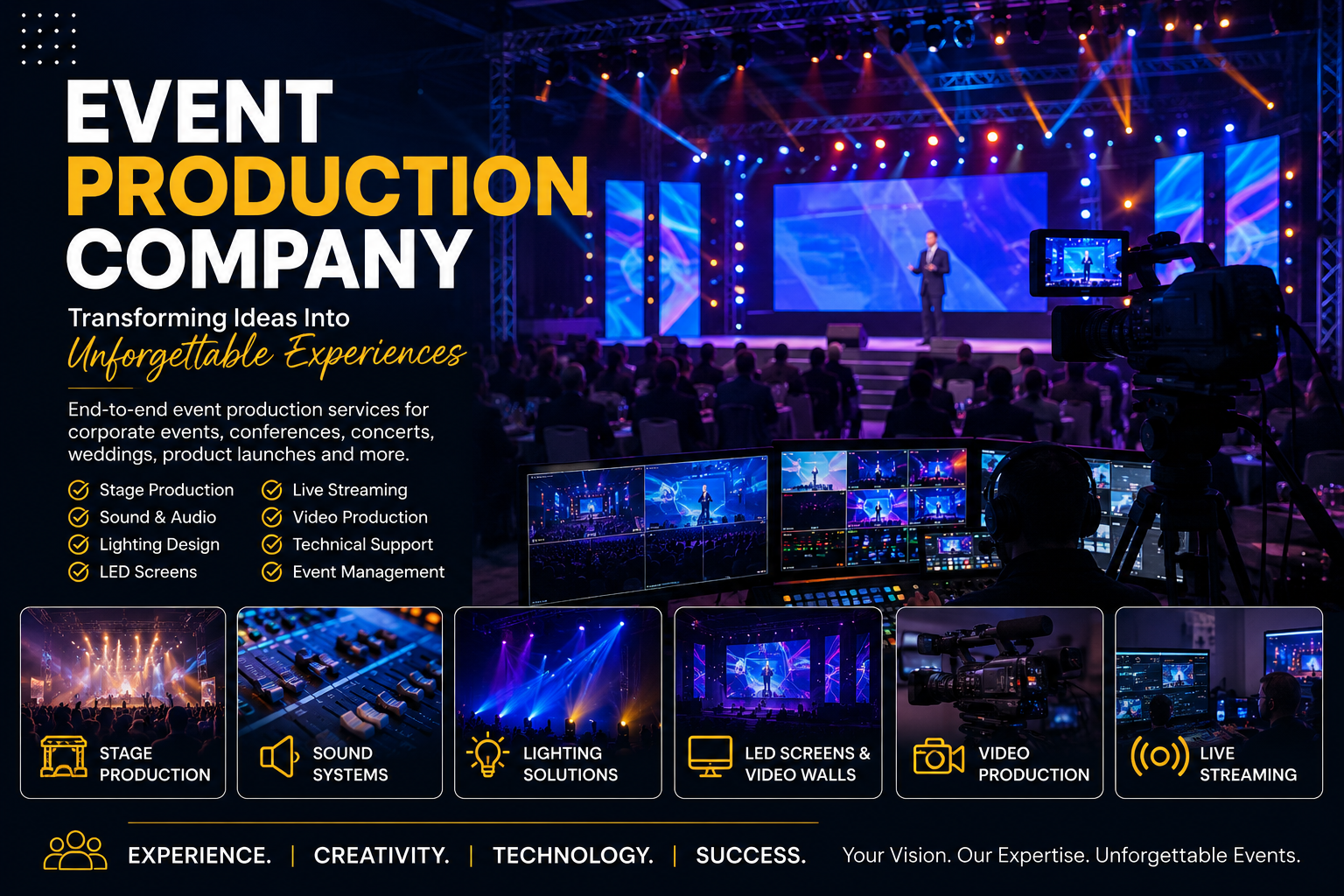
sound system rental is an important part of successful event production. Whether you are organizing a corporate conference, wedding, concert, church service, product launch, graduation, exhibition, political gathering, school function, or outdoor activation, the quality of the sound can determine how well your audience experiences the event.
A beautiful venue, professional stage, impressive lighting, and large LED screens cannot compensate for poor audio. If guests cannot hear the speaker clearly, music sounds distorted, or microphones keep cutting out, the overall event experience can suffer.
Professional sound system rental gives event organizers access to suitable speakers, microphones, mixers, amplifiers, monitors, subwoofers, wireless systems, cables, and technical operators without requiring them to purchase and maintain a complete professional audio setup.
The right sound system depends on several factors, including venue size, audience capacity, event type, indoor or outdoor location, stage layout, expected sound levels, number of speakers or performers, and the type of content being presented.
This guide explains how professional event sound systems work, the equipment involved, how to choose the right setup, and what to consider before hiring an audio rental provider in Kenya.
What Is Sound System Rental?
sound system rental is the temporary hiring of professional audio equipment and related technical services for an event or production.
Instead of purchasing speakers, microphones, mixers, amplifiers, stands, cables, monitors, and other equipment, an event organizer can hire a company that supplies and operates the required system.
This is particularly useful for organizations that only need professional audio equipment occasionally.
For example, a company organizing an annual conference may not need to own a complete professional sound system throughout the year. A wedding organizer may only require the equipment for one or two days. A church may need additional equipment for a large outdoor service.
Renting allows each event to use equipment appropriate for its specific requirements.
A professional provider can also handle delivery, setup, testing, operation, dismantling, and transportation.
Why Professional Sound Matters at Events
Sound is one of the most important elements of an event because it directly affects communication.
If a keynote speaker cannot be heard clearly, the audience may miss important information.
If a wedding speech is too quiet, guests may struggle to follow it.
If a concert system is poorly configured, music can become distorted and uncomfortable.
Professional sound system rental helps solve these challenges by providing equipment that is selected according to the event environment.
A properly designed system should distribute sound evenly throughout the audience area.
The objective is not simply to make the sound loud. It should be clear, balanced, consistent, and appropriate for the venue.
Sound Quality vs Sound Volume
One of the most common misunderstandings about event audio is that louder automatically means better.
Professional audio is about much more than volume.
A system can be extremely loud but still sound unpleasant if it is poorly configured.
Good event audio should provide:
- Clear speech
- Balanced music
- Appropriate bass
- Controlled volume
- Minimal distortion
- Consistent coverage
- Proper microphone levels
- Good feedback management
When planning sound system rental, the supplier should focus on the quality and distribution of the sound rather than simply providing the loudest speakers available.
Types of Events That Need Sound Systems
Almost every event involving speeches, presentations, music, performances, or announcements can benefit from professional audio.
Corporate Conferences
Corporate conferences require clear speech reproduction.
Speakers may present to hundreds or thousands of attendees, making reliable microphones and appropriate speakers essential.
A conference sound system may include:
- Wireless microphones
- Podium microphones
- Lapel microphones
- Headset microphones
- Main speakers
- Stage monitors
- Audio mixer
- Amplifiers
- Playback equipment
For large conferences, additional speakers may be required to cover different sections of the venue.
Weddings
Weddings combine speeches, music, announcements, entertainment, and ceremonies.
A wedding sound system may need to support the master of ceremonies, couple, family members, musicians, DJs, singers, and other performers.
The system should provide clear speech during the ceremony and reception while also delivering quality music.
For wedding sound system rental, the provider should understand that different sections of the wedding may require different audio arrangements.
The ceremony may need speech-focused equipment, while the reception may require stronger music reproduction and subwoofers.
Concerts
Concerts have significantly more demanding audio requirements.
A professional concert system may include:
- Line-array speakers
- Subwoofers
- Stage monitors
- Wireless microphones
- Vocal microphones
- Instrument microphones
- Digital mixers
- Amplifiers
- Signal processors
- Stage boxes
- Microphone stands
The system must work together with the performers, stage, lighting, and event production team.
Concert audio also requires careful sound checking before the audience arrives.
Church Events
Churches use sound systems for sermons, worship, prayers, announcements, choir performances, conferences, and special events.
Clear speech is particularly important during sermons and presentations.
Music reproduction is equally important during worship.
A church may therefore require a system capable of handling both speech and music.
For large church events, sound system rental can provide additional equipment when the organization’s existing system is not large enough for the expected audience.
Product Launches
Product launches often combine presentations, videos, music, demonstrations, and speeches.
A professional sound system helps ensure that every part of the presentation can be heard clearly.
The audio system may need to connect with:
- Presentation laptops
- Video playback
- Wireless microphones
- Stage monitors
- Cameras
- LED screens
- Background music
The sound engineer can manage the different audio sources during the event.
Graduation Ceremonies
Graduations can involve large audiences spread across halls, stadiums, school grounds, or outdoor venues.
The audience needs to hear speeches, names, announcements, and ceremonial proceedings.
For outdoor graduations, speaker placement is especially important.
A professional sound system rental provider can assess the venue and recommend a suitable configuration.
Understanding the Main Components of a Sound System
A professional event sound system consists of multiple components that work together.
Understanding the purpose of each component can help you make better rental decisions.
The main components include:
- Speakers
- Subwoofers
- Amplifiers
- Audio mixers
- Microphones
- Stage monitors
- Signal processors
- Cables
- Stands
- Wireless systems
- Playback equipment
The exact combination depends on the event.
A small corporate meeting may require only a few speakers and microphones.
A large concert may require dozens of audio components.
Main Speakers
Main speakers are responsible for delivering sound to the audience.
They are usually positioned in front of or beside the stage.
The number and type of speakers depend on the size and shape of the audience area.
A small indoor meeting may use a pair of powered speakers.
A large outdoor concert may require a much larger speaker system.
When arranging sound system rental, the supplier should determine how much coverage is needed rather than simply choosing speakers based on their physical size.
Powered vs Passive Speakers
There are two common categories of professional speakers: powered and passive.
Powered speakers have built-in amplifiers.
Passive speakers require external amplification.
Both options can be effective when correctly configured.
Powered speakers can simplify setup because the amplification is integrated into the speaker.
Passive systems can provide flexibility for larger professional installations where separate amplifiers and processing systems are used.
The rental provider can recommend the appropriate configuration based on the event.
Line Array Systems
Large concerts and outdoor events often use line-array speaker systems.
A line array consists of multiple speaker elements arranged to provide controlled sound coverage over large audience areas.
They are commonly used for:
- Concerts
- Festivals
- Large conferences
- Outdoor events
- Stadium events
- Major church gatherings
Line arrays can help distribute sound over long distances while allowing engineers to control coverage.
They require professional setup and alignment.
For large-scale sound system rental, line-array systems may be considered when audience size and venue conditions require them.
Subwoofers
Subwoofers reproduce low-frequency sound.
They are particularly important for music-based events where bass is a major part of the listening experience.
Subwoofers are commonly used for:
- Concerts
- DJ events
- Weddings
- Festivals
- Parties
- Product launches
- Entertainment events
Without appropriate low-frequency reproduction, music may sound thin.
However, too much bass can also become uncomfortable or overwhelm other elements of the mix.
A professional sound engineer balances subwoofers with the main speakers.
Choosing the Right Subwoofer Configuration
The number of subwoofers required depends on the event size, music style, audience capacity, venue, and desired sound level.
A small wedding may require only a limited low-frequency setup.
A large concert may require several high-powered subwoofers.
The goal is to create balanced low-frequency coverage rather than simply maximizing bass.
When planning sound system rental, explain whether the event will feature a DJ, live band, recorded music, or speeches.
This helps the supplier determine whether subwoofers are necessary and how many may be appropriate.
Microphones for Events
Microphones are essential for conferences, weddings, concerts, church events, and public gatherings.
There are several microphone types.
Handheld Microphones
Handheld microphones are commonly used by:
- Speakers
- Singers
- MCs
- Interviewers
- Presenters
They are versatile and easy to operate.
Lapel Microphones
Lapel microphones, also known as lavalier microphones, are small microphones clipped to a speaker’s clothing.
They are useful when presenters need to move around without holding a microphone.
They are commonly used for:
- Conferences
- Presentations
- Corporate events
- Interviews
- Training sessions
Headset Microphones
Headset microphones are worn around the head and can provide consistent microphone positioning.
They are useful for presenters who need both hands free.
Gooseneck Microphones
Gooseneck microphones are commonly installed on podiums or conference tables.
They are useful for formal presentations and meetings.
Wireless Microphones
Wireless microphones provide freedom of movement.
They are particularly useful for stage performances, weddings, conferences, and ceremonies.
However, wireless systems require proper frequency coordination and battery management.
A professional sound system rental company should test wireless microphones before the event begins.
Audio Mixers
The audio mixer is the control centre of many professional sound systems.
It allows the sound engineer to manage different audio sources.
For example, a conference mixer may receive:
- Wireless microphones
- Podium microphone
- Laptop audio
- Video playback
- Background music
A concert mixer may manage many more channels for vocals, instruments, playback tracks, and stage microphones.
The engineer can adjust levels, equalization, effects, routing, and other parameters.
Digital Audio Mixers
Digital mixers have become popular in modern event production because they provide extensive control and flexibility.
They can store settings, provide digital signal processing, support remote control, and manage complex audio systems.
For larger events, digital mixers can simplify the management of many audio channels.
The choice between digital and analog equipment depends on the event and the provider’s setup.
Audio Signal Processing
Signal processing helps improve the quality and consistency of the audio system.
It can include:
- Equalization
- Compression
- Limiting
- Crossover management
- Delay
- Feedback control
These tools allow the sound engineer to optimize the system for the venue.
Professional processing is particularly important in large venues where speakers and subwoofers need to work together correctly.
Stage Monitors
Performers need to hear themselves and other performers while on stage.
Stage monitors provide sound back to performers.
For example, a singer may need to hear their own voice along with the band’s music.
A speaker at a conference may need a monitor so they can hear video or remote participants.
A stage monitor system can therefore be important even though it is not directly intended for the audience.
For live sound system rental, the number and type of stage monitors depend on the performers and stage arrangement.
In-Ear Monitoring
Some professional performers use in-ear monitoring systems instead of traditional floor monitors.
In-ear monitors allow performers to receive a customized audio mix through earpieces.
They can reduce stage noise and give performers more control over what they hear.
This type of setup is more common in professional concerts and advanced live productions.
Indoor Sound System Rental
Indoor venues can present unique acoustic challenges.
Sound can reflect from walls, ceilings, windows, and other surfaces.
This can create echoes or make speech difficult to understand.
The sound system must therefore be selected and configured according to the room.
A large speaker system is not always the answer.
Sometimes careful speaker positioning and proper processing can produce better results than simply increasing volume.
When arranging sound system rental for an indoor venue, the supplier should ideally understand the room’s acoustics.
Outdoor Sound System Rental
Outdoor venues have different challenges.
There are fewer walls to reflect sound, but the audience may be spread over a large area.
Wind and environmental noise can also affect sound distribution.
The system may need:
- Larger speakers
- More speaker positions
- Subwoofers
- Delayed speakers
- Stronger amplification
- Additional power
For outdoor sound system rental, the provider should consider the size and shape of the audience area.
A speaker configuration designed for a small hall may not be suitable for a large open field.
Sound Delays for Large Events
Large outdoor events may use delay speakers.
The principle is simple: speakers positioned farther away can reproduce the sound after a carefully controlled delay.
This helps maintain synchronization between sound arriving from different speaker locations.
Delay systems can be useful for:
- Large conferences
- Stadium events
- Outdoor concerts
- Large church gatherings
- Festivals
These systems require careful technical planning.
Sound Coverage
One of the main goals of professional event audio is even coverage.
The person sitting near the front should not experience dramatically different sound from someone sitting farther away.
Poor coverage can result in some areas being too loud while others are too quiet.
The solution may involve:
- Speaker placement
- Additional speakers
- Delay systems
- Proper system tuning
- Appropriate amplification
This is why sound system rental should be planned based on the entire audience area rather than just the stage.
The Importance of a Sound Engineer
A professional sound engineer can make a significant difference.
The engineer is responsible for monitoring and controlling the system during the event.
Their responsibilities may include:
- Setting microphone levels
- Balancing music
- Managing speakers
- Preventing feedback
- Monitoring wireless microphones
- Adjusting equalization
- Switching audio sources
- Troubleshooting problems
For important events, having a qualified technician can be just as important as having good equipment.
Avoiding Microphone Feedback
Feedback occurs when a microphone picks up sound from a speaker and the signal loops through the system.
It can create a loud, unpleasant noise.
Professional sound engineers reduce the risk by carefully managing:
- Microphone position
- Speaker placement
- Gain levels
- Equalization
- Stage monitor levels
Feedback is one of the reasons event audio should be professionally configured before guests arrive.
Soundcheck Before the Event
A soundcheck should be performed before the event starts.
The technical team should test:
- All microphones
- Speakers
- Subwoofers
- Playback sources
- Wireless frequencies
- Stage monitors
- Mixer channels
- Audio cables
- Power
- Signal routing
Performers and speakers should ideally participate in the soundcheck where possible.
This allows the team to identify problems before the audience arrives.
What Determines the Right Sound System?
The correct system depends on several factors.
These include:
Audience Size
More people generally require more sound coverage.
Venue Size
Large venues may need additional speakers or delay systems.
Event Type
A conference has different audio requirements from a concert.
Music Requirements
Events featuring live music or DJs may need subwoofers and additional equipment.
Indoor or Outdoor Location
Outdoor events usually require different configurations.
Number of Speakers
A conference with multiple presenters may require several microphone types.
Stage Setup
The number of performers affects monitoring and microphone requirements.
Budget
The available budget determines the equipment package that can be provided.
A professional provider should balance all these factors when preparing a sound system rental solution.
Why Professional Sound System Rental Is Valuable
Professional audio equipment can be expensive.
Purchasing a complete system requires investment in:
- Speakers
- Subwoofers
- Mixers
- Amplifiers
- Microphones
- Monitors
- Cables
- Stands
- Cases
- Signal processors
There are also ongoing maintenance and storage requirements.
For organizations that only need professional audio occasionally, renting can be a more flexible option.
A rental provider can supply the appropriate equipment for each event without requiring the organizer to own everything.
Sound System Rental: Pricing, Equipment, Setup and Professional Audio Planning for Events in Kenya
sound system rental is an important consideration when planning an event because good audio allows every announcement, presentation, speech, performance, and piece of music to reach the audience clearly. While the size and appearance of an event often receive considerable attention, sound quality can have an even greater impact on the audience experience.
In Part 1, we explored the fundamentals of professional event audio, including speakers, subwoofers, microphones, mixers, amplifiers, monitors, indoor and outdoor systems, and the role of a sound engineer. In Part 2, we will focus on practical planning, pricing, equipment selection, setup, technical requirements, and how to choose an appropriate audio package.
What Affects Sound System Rental Prices?
The price of sound system rental varies according to the requirements of each event. There is no single price that applies to every conference, wedding, concert, church service, or outdoor gathering.
A small meeting may require only two speakers and a few microphones, while a large concert may require multiple speaker arrays, subwoofers, stage monitors, wireless microphones, mixers, amplifiers, technicians, and backup equipment.
Factors that can affect the cost include:
- Number and type of speakers
- Subwoofer requirements
- Number of microphones
- Mixer size
- Amplification
- Event duration
- Venue location
- Audience size
- Indoor or outdoor setup
- Transportation
- Installation
- Technical operators
- Stage monitoring
- Live music requirements
- Additional audio equipment
- Backup equipment
When requesting a quotation, provide as much information as possible so the supplier can recommend an appropriate system.
Audience Size and Sound System Cost
Audience capacity is one of the first factors a sound provider considers.
A system designed for 50 people is unlikely to be suitable for 1,000 attendees.
However, audience size alone does not determine the system.
The layout of the audience is equally important.
For example, 500 people seated in a compact conference hall may require a different configuration from 500 people spread across a large outdoor field.
The sound system must deliver sufficient coverage to the entire audience area.
When planning sound system rental, provide the expected number of guests and describe the seating arrangement.
Event Type and Equipment Requirements
Different events have different audio requirements.
A corporate seminar may prioritize speech intelligibility.
A wedding may require both clear speeches and powerful music.
A concert requires professional reproduction of vocals and instruments.
A church service may need a combination of speech, worship music, choir microphones, and stage monitoring.
A product launch may require microphones, video playback, background music, and presentation audio.
This means the equipment package should be built around the event rather than simply choosing a standard package.
Small Event Sound Systems
Small events can often be handled with a relatively simple setup.
Examples include:
- Small meetings
- Private celebrations
- Small workshops
- Indoor presentations
- Small birthday parties
- Intimate weddings
A typical setup may include two powered speakers, one or two microphones, a small mixer, stands, cables, and a playback source.
Although the system may be smaller, professional setup is still valuable.
Speaker positioning, microphone gain, and equalization can make a noticeable difference.
Medium-Sized Event Sound Systems
Medium-sized events may require additional equipment.
These can include:
- Larger main speakers
- Subwoofers
- Multiple wireless microphones
- Stage monitors
- Digital mixer
- Additional microphone stands
- Audio processors
- More powerful amplification
Medium-sized events may include corporate conferences, weddings, church programs, school events, exhibitions, and outdoor functions.
A professional sound system rental provider should assess the venue and audience before recommending the final configuration.
Large Event Sound Systems
Large events require more detailed planning.
A large concert, conference, festival, graduation, or public gathering may require a complete professional production system.
This could include:
- Line-array speakers
- Subwoofers
- Front-fill speakers
- Side-fill speakers
- Delay speakers
- Stage monitors
- Digital mixing consoles
- Wireless microphone systems
- Amplifiers
- Signal processors
- Stage boxes
- Digital audio networking
- Backup equipment
- Multiple technicians
The system should be designed to provide consistent coverage across the entire audience.
Choosing the Right Speakers
Speaker selection is one of the most important parts of event audio.
The supplier should consider the venue, audience distance, event type, required sound pressure level, and content.
A speaker that works well for a small indoor event may not be appropriate for a large outdoor gathering.
Likewise, simply choosing the highest-powered speaker does not automatically produce the best result.
The speaker must be suitable for the environment.
During sound system rental, ask the provider what type of speakers are being proposed and why they are suitable for your event.
Full-Range Speakers
Full-range speakers are designed to reproduce a broad range of frequencies.
They can be suitable for:
- Conferences
- Meetings
- Weddings
- Presentations
- Small performances
For smaller events, a pair of full-range speakers may be enough to provide both speech and music.
Larger events may require these speakers to be combined with subwoofers or other speaker systems.
Subwoofer Requirements
Subwoofers handle low-frequency sound.
They are particularly useful for events where music is an important part of the program.
DJs, bands, and concert performers often require strong low-frequency reproduction.
Subwoofers can help provide the impact required for:
- Bass-heavy music
- Kick drums
- Electronic music
- Dance music
- Live performances
- Concerts
However, the number of subwoofers should be based on the size and requirements of the event.
Too little bass can make music sound weak, while excessive bass can overwhelm the rest of the mix.
Line Array Systems
For large venues and outdoor events, line-array systems can provide controlled sound coverage over significant distances.
They are frequently used for concerts, festivals, large conferences, and major public events.
A line-array system is not simply a collection of speakers placed together.
The system needs to be correctly configured and positioned.
The angle between speaker elements, height, audience geometry, and system processing can all affect the result.
This is why large-scale sound system rental should include experienced technicians who understand professional system deployment.
Front-Fill Speakers
Front-fill speakers can help cover audience areas immediately in front of the stage.
The main speakers may be positioned higher or farther apart, which can sometimes leave the closest audience area with less direct coverage.
Small additional speakers can help provide more consistent sound in these areas.
They are particularly useful for larger concerts, conferences, and stage productions.
Delay Speakers
Large venues may require additional speakers positioned farther away from the main stage.
These are often configured with an audio delay so that sound arrives at the appropriate time.
Without proper delay, listeners near the secondary speakers could hear the same sound at different times, producing an echo-like effect.
Correct system design allows large audiences to experience more consistent audio.
Microphone Selection
Microphone selection depends on the person using it and the event environment.
For conferences, lapel and handheld microphones are common.
For singers, vocal microphones designed for live performance may be appropriate.
For instruments, specialized microphones may be required.
For panel discussions, several microphones may be placed around a table.
The supplier should know how many presenters, performers, and speakers will need microphones.
Wireless Microphone Planning
Wireless microphones provide presenters and performers with freedom of movement.
However, they need careful planning.
A professional system may involve several wireless channels operating simultaneously.
The technical team must ensure that frequencies are coordinated and that batteries are fully charged.
For larger sound system rental projects, the provider should also have spare batteries and contingency microphones available.
Lapel Microphones
Lapel microphones are particularly useful for corporate presentations.
They allow a speaker to move naturally without holding a microphone.
However, their placement can affect audio quality.
The microphone should be positioned appropriately to reduce clothing noise and maintain consistent vocal levels.
The sound engineer should also monitor the speaker throughout the presentation.
Headset Microphones
Headset microphones can be useful when presenters need to move freely or use both hands.
They are common in:
- Training sessions
- Conferences
- Church presentations
- Theatre
- Fitness events
- Stage performances
They can provide consistent microphone positioning when properly fitted.
Podium Microphones
Podium microphones are useful for formal speeches.
They can be positioned directly in front of the speaker and provide a professional presentation setup.
They are commonly used for:
- Conferences
- Graduations
- Government functions
- Corporate meetings
- Award ceremonies
- Formal presentations
The microphone should be positioned correctly to capture the speaker clearly without requiring excessive amplification.
Conference Audio Systems
Conferences may involve several presenters and panelists.
The audio system therefore needs to handle multiple microphones while maintaining speech clarity.
A conference setup can include:
- Podium microphone
- Wireless handheld microphones
- Lapel microphones
- Panel microphones
- Main speakers
- Stage monitors
- Mixer
- Playback system
For larger conferences, the audio system may also need to integrate with video conferencing and livestreaming equipment.
Wedding Audio Planning
Wedding audio requires flexibility because the program can change throughout the day.
A typical wedding may involve a ceremony, speeches, music, performances, announcements, and dancing.
The system should be capable of handling these different stages.
For the ceremony, speech clarity may be the priority.
During the reception, music and entertainment may require additional bass and stronger speakers.
A professional sound system rental provider can create a setup that accommodates the entire program.
DJ Sound Systems
DJs typically need a system capable of reproducing a wide range of frequencies at suitable levels.
A DJ setup may include:
- Main speakers
- Subwoofers
- DJ mixer
- DJ controller or decks
- Monitor speaker
- Cables
- Power distribution
The number of speakers and subwoofers depends on the venue and audience.
For large parties, additional coverage may be required.
Live Band Sound Systems
Live bands have more complex audio requirements than simple playback systems.
Different instruments may require separate microphone or direct-input channels.
A band could have:
- Lead vocals
- Backing vocals
- Kick drum
- Snare
- Toms
- Cymbals
- Bass guitar
- Electric guitar
- Keyboards
- Percussion
Each source needs to be managed through the mixing console.
Stage monitoring is also essential because musicians need to hear themselves and one another.
Stage Monitoring
Stage monitors allow performers to hear the performance.
A singer may need to hear their vocal clearly.
A guitarist may need to hear their instrument and the lead vocal.
A drummer may require a different mix.
Professional monitoring can improve performance and reduce confusion on stage.
For live-band sound system rental, the provider should ask about the number of performers and their monitoring requirements.
Digital Mixing Consoles
Digital mixing consoles offer advanced control over complex audio systems.
They can provide:
- Multiple channels
- Digital effects
- Equalization
- Compression
- Routing
- Scene storage
- Remote control
- Monitoring
- Signal processing
For conferences, digital mixers can allow technicians to save settings for different sessions.
For concerts, they can manage many inputs and outputs.
Audio Equalization
Equalization allows a sound engineer to adjust different frequency ranges.
For example, speech may benefit from reducing unwanted low frequencies and improving clarity in the vocal range.
Music may require a different balance.
Equalization can also help reduce problematic frequencies in a venue.
This is one of the reasons professional sound system rental should include proper system tuning.
Compression and Limiting
Compression helps control the dynamic range of audio.
It can prevent sudden changes in volume and make certain sources more consistent.
Limiters can help protect equipment and prevent excessive signal levels.
These tools are particularly useful in professional live audio systems.
Preventing Distortion
Distortion can occur when audio levels become too high or equipment is pushed beyond its capabilities.
Professional sound engineers monitor levels throughout the event.
They ensure that microphones, mixers, amplifiers, and speakers are operating within appropriate limits.
Good gain management is essential for clean audio.
Outdoor Sound Challenges
Outdoor events can be challenging because sound behaves differently without walls and ceilings.
The audience may also occupy a much larger area.
Environmental noise can include:
- Traffic
- Wind
- Generators
- Crowds
- Nearby businesses
- Construction
- Aircraft
The system needs sufficient output and appropriate speaker placement to overcome environmental conditions without becoming excessively loud.
For outdoor sound system rental, the supplier should assess the event location in advance where possible.
Power Requirements
Professional audio equipment requires reliable electrical power.
A large system may use several amplifiers, powered speakers, mixers, processors, wireless equipment, and other devices.
Power requirements should therefore be discussed during the planning stage.
The venue may provide mains power, or the event may require a generator.
Power distribution should be planned carefully.
Generator Considerations
Outdoor events frequently use generators.
The generator should have sufficient capacity for the audio system and other production equipment.
It should also provide stable power.
Where multiple production systems are being used, the event production team should coordinate power requirements for:
- Sound
- Lighting
- LED screens
- Catering
- Staging
- Other equipment
A professional sound system rental provider should communicate its power requirements before installation.
Cable Management
Cables are an essential part of every sound system.
They connect microphones, mixers, amplifiers, speakers, instruments, and other equipment.
However, poorly managed cables can create safety hazards.
Cables should be routed carefully and protected where they cross audience or working areas.
Cable management also helps reduce accidental disconnections.
Equipment Backup
Important events should have contingency equipment.
Backup items may include:
- Spare microphones
- Extra cables
- Backup mixers
- Spare batteries
- Additional speakers
- Backup playback devices
- Spare power supplies
The amount of backup equipment depends on the importance and scale of the event.
For a major corporate launch or concert, backup planning should be part of the technical strategy.
Transportation and Setup
Sound equipment can be heavy and bulky.
The rental company needs to plan transportation carefully.
Equipment may include speakers, subwoofers, amplifiers, mixers, microphone cases, stands, cables, and other accessories.
The provider should also know when the venue will be accessible.
Large events may require several hours for setup and testing.
When arranging sound system rental, confirm delivery, setup, and dismantling times in advance.
Soundcheck
Soundcheck is one of the most important stages of event preparation.
The technical team should test the complete system before the event begins.
This can include:
- Microphones
- Speakers
- Subwoofers
- Playback devices
- Stage monitors
- Wireless systems
- Instruments
- Mixer channels
- Power
- Signal routing
Performers should ideally be available during soundcheck.
This allows the engineer to create appropriate mixes for both the audience and stage.
Technical Operators
A professional audio system requires someone who understands how to operate it.
A sound engineer can monitor levels and make adjustments throughout the event.
They can also respond to unexpected issues.
For example, if a speaker suddenly becomes too loud, a microphone develops feedback, or a presenter changes microphones, the technician can respond immediately.
For major events, technical operation should be included in the rental plan.
How to Choose the Right Rental Provider
When comparing sound providers, look beyond the equipment list.
Consider the provider’s experience with your type of event.
Ask whether they have handled similar venues and audience sizes.
You can also ask for examples of previous work.
A professional provider should be able to explain why a particular system is appropriate rather than simply giving you a list of equipment.
Questions to Ask Before Booking
Before confirming your sound system rental, ask:
- What equipment is included?
- How many speakers will be supplied?
- Are subwoofers included?
- How many microphones are included?
- Are wireless microphones available?
- Is a mixer included?
- Are stage monitors included?
- Is transportation included?
- Is setup included?
- Is dismantling included?
- Will a sound engineer be present?
- Is backup equipment available?
- What power supply is required?
- How early will setup begin?
- Can the system support live music?
These questions can help prevent misunderstandings.
Don’t Choose Based Only on Price
The cheapest sound system rental package is not necessarily the best.
A very low quotation may exclude important services such as transportation, technical support, installation, or additional microphones.
It may also involve equipment that is not appropriate for the venue.
Instead of comparing prices alone, compare the complete service.
Look at the equipment, technical support, reliability, experience, setup, and backup arrangements.
Planning the Budget
A sound budget should consider the entire audio requirement.
Possible costs can include:
- Equipment rental
- Transportation
- Installation
- Technical operators
- Additional microphones
- Subwoofers
- Stage monitors
- Power
- Backup equipment
- Overtime
- Dismantling
Ask the provider for a detailed quotation.
This makes it easier to understand exactly what you are paying for.
Getting Value From Your Rental
The best value comes from selecting a system that matches the event.
You do not necessarily need the biggest system.
A small corporate meeting may not benefit from the same equipment used for a major concert.
Likewise, a large outdoor festival should not rely on a basic meeting-room audio package.
A professional supplier should balance performance and cost.
Planning Sound Alongside Other Event Production
Audio rarely operates independently.
At a major event, the sound team may need to coordinate with:
- Event planners
- Stage teams
- Lighting technicians
- LED screen operators
- Camera crews
- Livestreaming teams
- Performers
- Venue management
This coordination ensures that the different production systems work together.
For example, the sound engineer may need to receive audio from a laptop while the LED screen operator displays the associated presentation.
A concert may require sound, lighting, video, and stage teams to coordinate timing.
Final Preparation Before the Event
Before the event day, confirm:
- Venue access
- Event schedule
- Stage dimensions
- Audience capacity
- Equipment list
- Microphone requirements
- Power availability
- Setup time
- Soundcheck time
- Technical personnel
- Backup equipment
- Dismantling schedule
Clear communication can prevent many technical problems.
- sound system rental
- sound system rental
- sound system rental
- sound system rental
- sound system rental
- sound system rental
- sound system rental
- sound system rental
- sound system rental
- sound system rental
- sound system rental
- sound system rental
- sound system rental
- sound system rental
- sound system rental
- sound system rental
- sound system rental
- sound system rental
- sound system rental
- sound system rental
- sound system rental
- sound system rental
- sound system rental
- sound system rental
- sound system rental
- sound system rental
- sound system rental
- sound system rental
- sound system rental
- sound system rental
- sound system rental
- sound system rental